Possum Removal Brisbane
Humane, Licensed & Fast
Possum removal Brisbane homeowners can book fast, legally, and year-round. Our DES-licensed team works across inner Brisbane, Logan, Ipswich, Redcliffe and Caboolture, removing possums humanely from Queenslander roofs, ceiling voids and sub-floor spaces, then sealing the entry points that let them in.
Possum Problem in Brisbane?
Trusted Possum Removal Specialists Serving Greater Brisbane
Brisbane is the one major Australian city where possum removal jobs stay active in every month of the year with no meaningful winter slowdown. The reason is simple: the subtropical climate never really switches possums off. Warm nights, long growing seasons, reliable backyard food sources, and dense suburban tree canopy keep brushtail possums moving, breeding, and competing for den sites in January, July, and every month in between. That is why possum removal Brisbane demand is unusually stable compared with southern capitals that see more seasonal fluctuation.
The building style matters just as much as the climate. Brisbane's classic Queenslander homes remain the single most common entry pattern we see on inspection. Wide eaves, raised sub-floors, timber battens, weathered fascia boards, ventilated roof spaces, and elevated access points all create opportunities for a territorial possum to move from tree branch to gutter line and then into the structure itself. In suburbs with older timber housing stock, possums do not just use the roof cavity. They also explore under-house voids, verandah ceilings, and wall cavities around stair landings and rear extensions.
Possum Removal Pros has handled more than 110 Brisbane-area removals since 2019, covering everything from compact workers cottages in Paddington to post-war timber homes in Kedron, bayside properties in Wynnum and Manly, and fast-growing estates around Springfield, Logan, and Caboolture. We complete legal catch-and-release work under Queensland wildlife rules, identify the exact roofline weakness being exploited, and pair removal with proofing so the same entry gap does not become a revolving door for the next animal two nights later.
Queensland compliance is not optional. Possums are protected native wildlife, and lawful handling requires the correct authority under the state's environmental framework. Queensland wildlife work is regulated through the relevant Queensland Government wildlife authority / DETSI framework. Our Brisbane team operates in line with the Nature Conservation Act 1992. Traps are placed correctly, checked within the legal timeframe, and any release is carried out within the strict Queensland distance rules that are much tighter than what many homeowners assume.
Local habitat pressure keeps intensifying. Mature figs, jacarandas, poincianas, brush box, and eucalypts still define many Brisbane streets, but hollow-bearing trees continue to disappear as blocks are subdivided and older homes are replaced. When natural den sites are lost, ceiling voids become the nearest dry substitute. That is why we see high-volume possum removal Brisbane enquiries not only in leafy inner suburbs, but also in growth corridors where housing has expanded directly into former feeding territory.
For many households, the first sign is not sighting a possum at all. It is scratching above the bedroom, repeated thumping across the ceiling around 11 pm, urine odour in the insulation after summer rain, or a pet reacting to movement under the house. Once that behaviour starts, it rarely resolves by itself in Brisbane. The climate, food supply, and architecture all favour repeat use of the same sheltered space until the animal is removed legally and the access route is professionally closed.
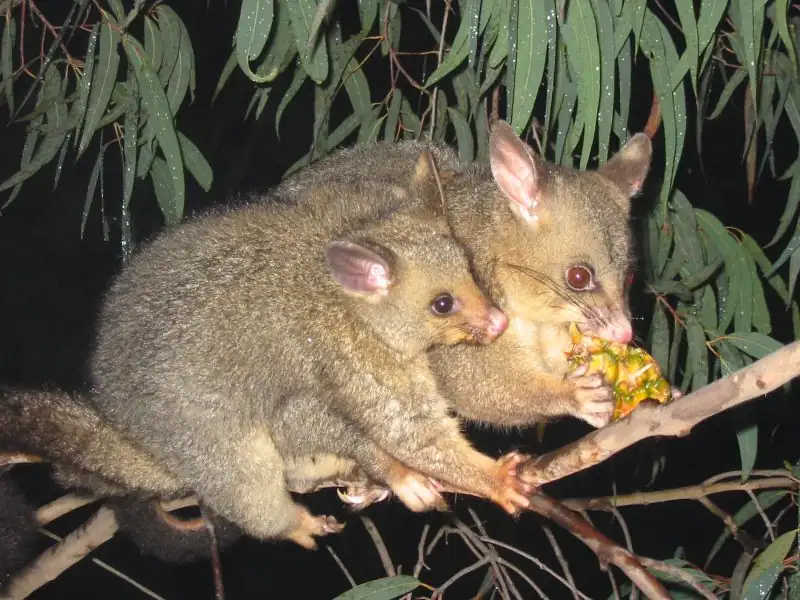
Brisbane Possum Services Homeowners Use Most
Brisbane possum problems rarely stop at trapping alone. Older roofs, damaged fascia boards, dead-animal odours, and repeat entry often mean homeowners need a full service pathway, not a one-off visit.
Possum Identification Guide for Brisbane Homeowners
Two species commonly invade Brisbane homes. Knowing which one you have helps us provide the right solution faster.
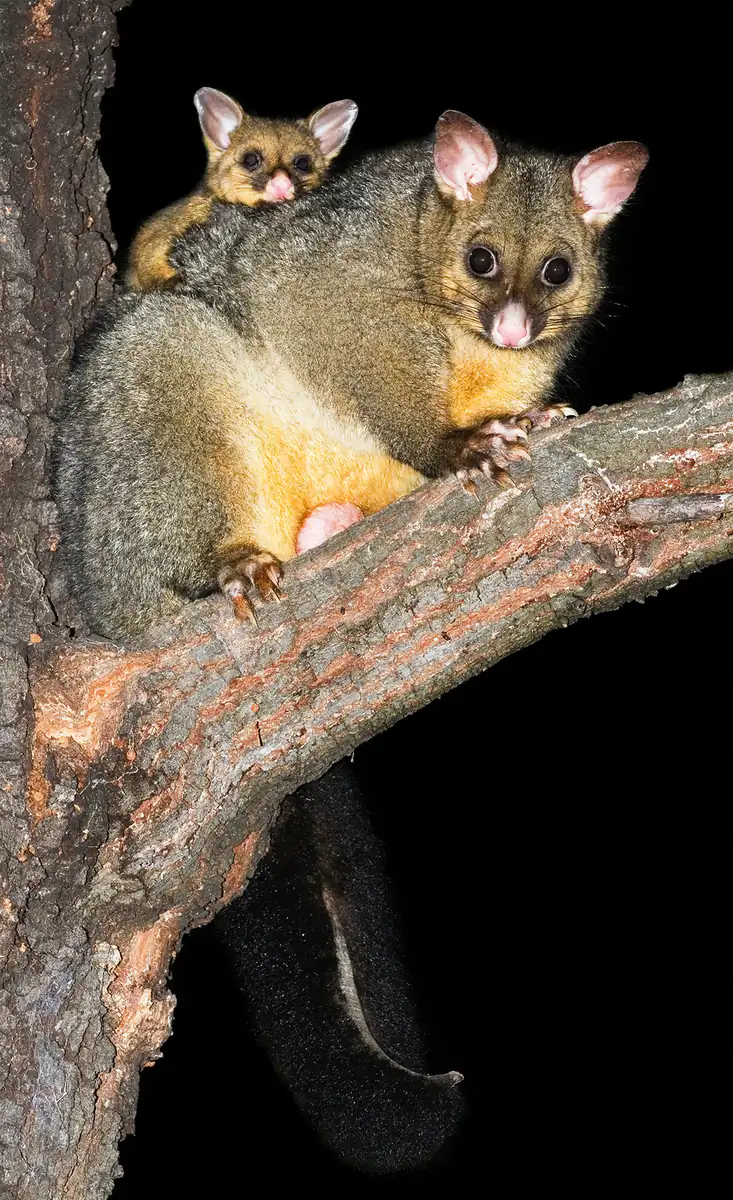
Common Brushtail Possum
Trichosurus vulpecula
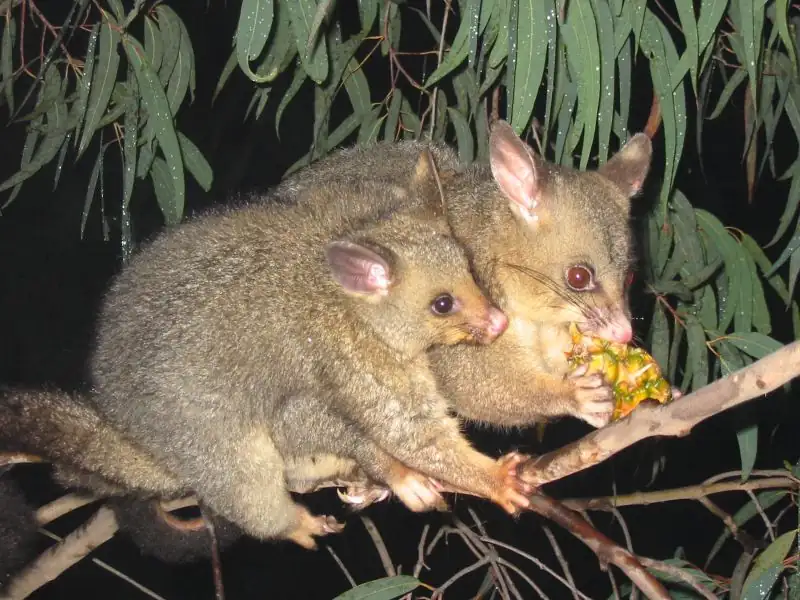
Common Ringtail Possum
Pseudocheirus peregrinus
Signs You Have a Possum in Your Brisbane Home
Possums are nocturnal, so you may not see them — but you'll definitely hear and smell them. Here's what to look and listen for in Brisbane homes.
Heavy thumping or running sounds
Particularly between 9pm and 4am. Brushtail possums are surprisingly heavy and loud when moving across ceiling joists.
Hissing, screeching or coughing sounds
Brushtails make guttural coughs and loud screeches, especially when disturbed or fighting for territory.
Yellow ceiling stains or ammonia smell
Possum urine soaks through insulation and into plasterboard, leaving brown-yellow stains and a strong, sharp ammonia odour.
Scratch marks on roof tiles or fascia boards
Entry and exit points are often marked with worn timber, broken tiles, or disturbed mortar — look for these at dusk.
Foul dead animal smell
A possum that has died inside your roof will create an intense odour within 48 hours. This requires urgent professional removal.
Damage to garden and fruit trees
Chewed leaves, stripped bark, half-eaten fruit — classic signs of possum foraging activity near your home each night.
🚨 Don't Ignore It
A possum in your roof is not just an annoyance. Left unaddressed, the damage escalates quickly. In Brisbane's climate, moisture from possum urine can cause mould, timber rot, and short-circuits within weeks.
Call Now — 1800 482 916The Real Cost of Doing Nothing
Why Possums Are a Serious Risk to Brisbane Properties
Brisbane's humidity, storm cycle and elevated timber housing let possum problems escalate quickly. These are the main risks we see when roof activity is left untreated.
Year-Round Roof Activity
Brisbane's subtropical climate means possums keep using roofs in every season. There is no real winter pause, so noise, contamination, and territorial return behaviour keep building unless the access point is sealed.
Queenslander Entry Risk
Wide eaves, timber vents, raised stumps, and ageing weatherboards make Queenslander homes easier to enter than newer brick homes. We often find both roof and sub-floor access on the same property.
Humidity-Driven Mould
Urine-soaked insulation in Brisbane humidity becomes a mould problem fast. Once ceiling cavities stay damp through summer storms, odour and fungal growth spread much further than homeowners expect.
Storm Season Electrical Hazard
Possum-chewed wiring is dangerous anywhere, but Brisbane's storm season adds extra load through moisture, lightning activity and older switchboards, increasing the chance of electrical faults or fire.
Secondary Wildlife Attraction
Active possums, droppings and roof void scent can attract carpet pythons and other opportunistic wildlife. In Brisbane this is a genuine local complication, especially around leafy gullies and creek corridors.
Pest Escalation
Droppings, nesting debris and damaged insulation attract insects and rodents. One possum problem in a warm Brisbane roof space can quickly turn into a broader pest and hygiene issue.
Common Brushtail in Urban Brisbane
The primary species entering roofs
Why Possums Choose Brisbane Roofs
Brisbane roofs are attractive because they solve three possum needs at once: shelter, elevation, and safety. A roof cavity stays drier than an exposed drey, remains close to food trees and backyard gardens, and gives a territorial animal a protected den site above dogs, people, and traffic. In a city where natural hollows keep disappearing, that combination is hard for possums to ignore.
Queenslander architecture amplifies the problem. Wide eaves create shaded approach zones, timber elements deteriorate gradually rather than all at once, and raised homes offer multiple transition points from the ground plane to the roofline. During inspection, Queenslander homes with wide eaves and elevated stumps are still the most common entry vector we identify on possum removal Brisbane jobs.
Summer weather is another trigger. Brisbane storms regularly lift ridge capping, shift tiles, expose flashing lines and open eave vents. Possums exploit fresh storm damage quickly, especially in suburbs with dense canopy cover where tree limbs already touch or overhang the roofline.
Possum Removal Laws in Queensland
In Queensland, possums are protected under the Nature Conservation Act 1992 and related wildlife management rules. Homeowners cannot legally trap, relocate or harm a possum however they like. Brisbane possum work must be handled under the correct licence or permit pathway, and commercial operators need current authority recognised by the Department of Environment and Science. Queensland is especially strict on release distance: captured possums must be returned within 25 metres of the capture site so they stay inside their established territory. Our Brisbane team follows DES licence conditions, documents each job, checks traps within the required timeframe, and performs humane dusk release in compliance with Queensland law.
⚠️ Penalties for illegal possum removal in Queensland include fines up to $15,075. Always use a licensed operator.
DES Licence Required
Commercial possum trapping in Brisbane requires the correct DES wildlife authority. Our technicians operate under current Queensland licensing requirements and compliance conditions.
25-Metre Release Rule
Queensland's release rule is among the strictest in Australia. Captured possums must be returned within 25 metres of where they were caught, usually at dusk near a climbable structure.
24-Hour Trap Check
Cage traps must be checked within the legal timeframe. We monitor every active trap daily and never leave a captured possum unattended beyond licence limits.
No Poison or Harm
It is illegal to poison, injure or kill possums. Brisbane removals must use humane methods and lawful handling from inspection through release.
Our Humane Possum Removal Process in Brisbane
Every job follows the same meticulous 6-step process — compliant with Queensland wildlife law, every time.
Same-Day Brisbane Inspection
We inspect the roofline, ceiling void and, where relevant, the raised sub-floor to confirm species, activity level and entry points. Most Brisbane bookings receive a written quote on the first visit.
DES-Compliant Trap Placement
Approved cage traps are positioned in the most effective legal locations, usually within the roof cavity, along an entry route, or near a repeated access point identified during inspection.
Daily Monitoring
Every trap is checked within the required timeframe under Queensland conditions. We track captures closely because Brisbane's year-round activity often means the roof is part of an established territory route.
Humane Dusk Release
Captured possums are released at dusk within 25 metres of the capture point, beside suitable vegetation or a climbable tree, exactly as Queensland law requires.
Proofing the Access Point
Once removal is complete, we seal the confirmed entry route with steel mesh, timber repairs, eave restoration or tile-line work suited to Brisbane roof construction.
Alternative Habitat Support
Where suitable, we install a possum box nearby so the resident animal has a legal alternative shelter and is less likely to test the roof again after release.
Mother Brushtail Removed - Kedron Queenslander
Kedron Brook Road, Kedron QLD 4031
A female brushtail possum was entering the ceiling cavity of a post-war Queenslander through a damaged eave return above the front verandah. The home also had scratching under the raised rear section, and the owners were dealing with urine odour after heavy rain.
We completed a 3-night trap program under DES compliance, confirmed a single active roof possum, released it legally at dusk within the required local distance, repaired the eave entry with stainless mesh and timber trim, and screened the under-house transition point.
Roof noise stopped immediately. Follow-up inspection found no fresh droppings, no renewed scratching, and no re-entry through the sealed eave line.
"They understood Queenslander construction straight away, found the exact gap, and explained the law clearly. No more roof noise, and the repair blends in perfectly."
— Daniel & Priya S., Kedron QLD
Possum Removal Across All Brisbane Suburbs
We cover all of Brisbane — across the inner city, North Brisbane, Logan and the south, Bayside and the east, and Ipswich through Brisbane's west.
North
South
South West
West
Don't see your suburb? We likely cover it. Call us to confirm.
📞 Call 1800 482 916Our Possum Services in Brisbane
We provide a complete range of possum and wildlife management services across Brisbane. Each service is performed by our licensed local team.
Possum Removal
Licensed cage trapping and humane dusk release — the right way to remove possums from Brisbane roofs.
Possum Removal in Brisbane →Possum Proofing
Permanent roof exclusion using professional-grade steel mesh and materials — sealing every Brisbane roof entry point.
Possum Proofing in Brisbane →Roof Repairs
Full repair of possum-related roof damage — tiles, insulation, timber, and wiring — across all Brisbane property types.
Roof Repairs in Brisbane →Dead Possum Removal
Same-day emergency removal of deceased possums from Brisbane roofs and walls — with full decontamination and odour treatment.
Dead Possum Removal in Brisbane →Possum Boxes
Government-approved nesting box installation in Brisbane — the most effective way to prevent possums returning to your roof.
Possum Boxes in Brisbane →Strata Services
Building-wide possum management for Brisbane strata schemes, apartments, and commercial properties — with full OC documentation.
Strata Services in Brisbane →Possum Removal Brisbane — Frequently Asked Questions
Common questions from Brisbane homeowners about possum removal.
Yes, but only when the work is done under Queensland wildlife law and the correct DES licence or authority. You cannot legally trap, relocate or harm a possum in Brisbane just because it is inside your roof. For a full state-by-state breakdown, see our guide on are possums protected in Australia. Queensland has the strictest penalties in the country at up to $25,740.
Our team provides licensed possum removal in Brisbane for roofs, ceilings and raised sub-floor homes and follows Queensland's trap-check, handling and dusk release requirements on every job.
Brisbane's subtropical climate keeps possums active in every month of the year. There is no reliable winter slowdown like you sometimes see in cooler southern cities.
Warm nights, stable food supply, and year-round shelter demand mean a possum that discovers a safe roof cavity is likely to keep using it until the animal is removed and the entry point is sealed.
Queenslander homes combine multiple access advantages for possums: wide eaves, ageing timber details, raised sub-floors, vented roof spaces and easy transition points from trees to gutters.
On Brisbane inspections, Queenslander homes with wide eaves and elevated stumps are the most common entry vector we find. That is why proper proofing matters just as much as the trap program itself.
Straightforward Brisbane jobs typically start from around $220-$300, with higher pricing for complex Queenslander access, multiple possums, under-house work, proofing or roof repairs.
Homeowners can see our Brisbane pricing guide before booking an inspection. If the roofline also needs sealing, our Brisbane possum proofing for Queenslander eaves, vents and roofline gaps service can be quoted at the same inspection so you know the full cost before work begins.
Yes. We cover greater Brisbane and surrounding demand corridors including Logan, Redcliffe, Ipswich and Caboolture, along with inner Brisbane and bayside suburbs.
If the problem has already become an odour or contamination issue, we also provide dead possum removal in Brisbane for roof odours, contamination and carcass recovery.
Need Possum Removal in Brisbane Today?
Don't spend another sleepless night listening to scratching in your roof. Our Brisbane team is ready — same-day bookings available 7 days a week.
DES Licensed · Fully Insured · Written Quote · 6-Month Guarantee