Possum Removal Eastern Melbourne in Melbourne
Humane, Licensed & Fast
Melbourne's eastern suburbs — Box Hill, Ringwood, Doncaster, Blackburn, Boronia, Ferntree Gully, Glen Waverley and more — sit where the city's middle ring meets the Dandenong foothills, and the bushland interface drives a constant stream of possums toward rooflines. Weatherboard and brick veneer homes with shallow roof voids, plus the creek corridors running through the region, give possums both habitat and access routes. We've completed over 40 possum removal jobs across eastern Melbourne, every one DEECA-licensed, humane, and guaranteed. Same-day possum removal eastern Melbourne — including Ringwood, Boronia, Blackburn and Ferntree Gully.
Possum Problem in Eastern Melbourne?
Possum Removal Eastern Melbourne — Foothill Interfaces, Creek Corridors, and the City's Bushland-Edge Territory
Eastern Melbourne is where Melbourne's middle ring gives way to the Dandenong Ranges, and that transition is the defining feature of possum work here. Suburbs like Boronia, Ferntree Gully and Bayswater back directly onto the foothills, while Ringwood, Blackburn and Croydon sit along the creek corridors — the Mullum Mullum, the Dandenong Creek, the Koonung — that carry possums from bushland down through the suburbs. Properties on the bushland edge face a constant approach pressure that inner-city homes simply do not: the source population in the adjacent reserves is effectively unlimited, so the moment a gap opens in a roofline, a possum finds it.
The housing stock across eastern Melbourne spans the same three eras as much of the city. Post-war weatherboard homes in Boronia and Ringwood have timber verandahs, shallow roof voids and easy-to-warp wall-plate junctions. 1960s-80s brick veneer in Blackburn, Nunawading and Doncaster has eave capping and cavity access points that fail after decades of thermal cycling. And the newer builds around Glen Waverley, Box Hill and the eastern growth pockets have roof penetrations and pergola ties that possums exploit before the paint is dry. Each era fails differently, and our inspections are built to find the era-specific weakness rather than just the most obvious gap.
The creek corridors deserve special mention. The Mullum Mullum Creek trail, the Dandenong Creek corridor and the Koonung Creek trail form continuous treed pathways that run the length of the eastern suburbs. Possums use them as daytime habitat and dusk travel routes, and homes backing onto these corridors see far more roof activity than the surrounding blocks. Homeowners along the trails often tell us the same story: possums in the roof appear shortly after the trees matured along the creek, because the population density along the corridor finally reached the point where the animals started looking for new shelter.
The foothill suburbs add the Dandenong interface. Boronia, Ferntree Gully, Bayswater and the eastern edge of Ringwood sit at the base of the Dandenong Ranges, where the bushland is only a street or two away. Homes here face the same situation as properties anywhere in Melbourne that back onto a reserve: rooflines at canopy height, constant nocturnal traffic, and entry points that get re-exploited as fast as they are sealed unless the whole roof line is closed. The tree canopy on these blocks is also denser, so possum boxes are more often viable — there is usually a strong mature tree within a few metres of the roofline to house the local animal.
Finally, eastern Melbourne's mix of established middle-ring suburbs and fast-growing pockets around Box Hill and Glen Waverley means our work here spans everything from heritage-style period homes to brand-new builds. Regardless of the era, the principle is the same: identify the species, map the entry path, trap and release legally, then seal every route so the next possum cannot move in. Every eastern Melbourne job we complete ends with the six-month re-entry guarantee on every sealed point, because re-infestation pressure along the creek corridors is simply too high to gamble on partial proofing.
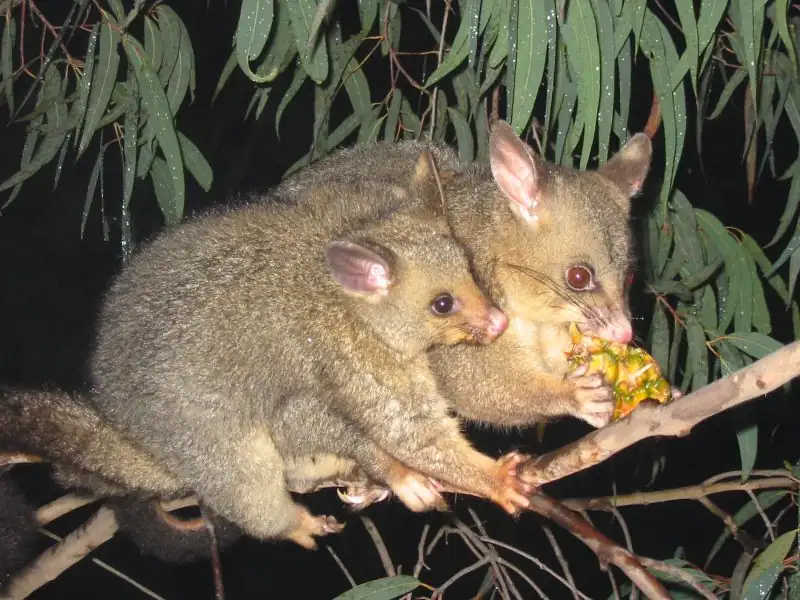
Eastern Melbourne Possum Services Homeowners Use Most
Eastern Melbourne possum problems rarely stop at trapping alone. Older roofs, damaged fascia boards, dead-animal odours, and repeat entry often mean homeowners need a full service pathway, not a one-off visit.
Why Possums Are a Serious Risk to Eastern Melbourne Properties
Eastern Melbourne's bushland interfaces, creek corridors and ageing housing stock create possum damage risks that build quickly — especially on weatherboard and brick veneer homes.
Electrical Fire Hazard
Possums chew electrical wiring in roof cavities. In post-war weatherboard and brick veneer homes across Boronia, Ringwood and Blackburn, chewed wiring in shallow roof voids is a real fire risk, especially where the insulation is old and dry.
Foothill Timber Rot
Properties backing onto the Dandenong foothills and creek corridors face constant possum occupation. Urine and nesting material accelerate decay of weatherboard walls, fascia boards and verandah timbers faster than in drier parts of the city.
Shallow Void Insulation Damage
Post-war homes in Ringwood, Boronia and Blackburn have shallow roof voids where possums compress and soil insulation quickly. Urine-soaked batts need full replacement to remove the ammonia odour and restore thermal performance.
Bushland Pest Pressure
The Dandenong interface and creek corridors supply a steady stream of new possums. Without complete proofing, homes on the bushland edge face re-infestation within weeks as displaced animals move in.
Verandah & Barge Board Loss
Possums gnaw at timber verandahs, barge boards and fascia on eastern Melbourne weatherboard homes. On 60+ year old timber, this damage can spread to the roof structure if left untreated.
Noise in Shallow Roof Voids
Shallow roof voids act like amplifiers — scratching and thumping above a bedroom ceiling in a post-war home is louder than in deeper modern cavities. Boronia and Ringwood homeowners are frequent urgent callers for this reason.
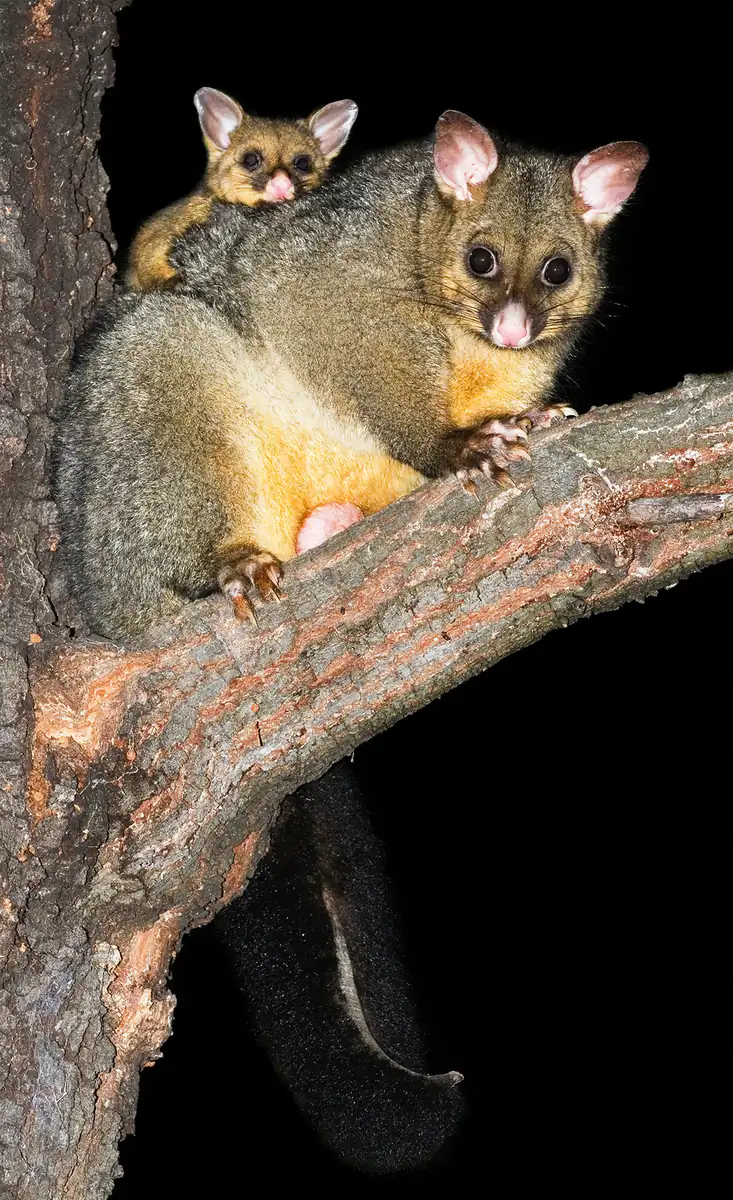
Common Brushtail in Urban Eastern Melbourne
The primary species entering roofs
Why Possums Choose Eastern Melbourne Roofs
The bushland interface is the single biggest factor driving eastern Melbourne possum infestations. Suburbs along the Dandenong foothills and the creek corridors sit adjacent to large, healthy possum populations with nowhere else to go. When a roofline opens up — a lifted tile, a gap in the eave capping, a rotted barge board — the nearest possum is usually only a garden or two away. Homes on the bushland edge face a level of constant pressure that inner-city suburbs never experience, which is why proofing here has to be complete rather than targeted at the one visible hole.
The housing stock compounds the problem. Post-war weatherboard homes in Boronia, Ringwood and Bayswater have timber that possums chew easily and wall-plate junctions that warp with Melbourne's seasonal moisture swings. Brick veneer homes of the 1960s-80s in Blackburn, Nunawading and Doncaster rely on eave capping to seal the cavity between brick and frame — and that capping fails reliably after five or six decades. When it does, the cavity becomes a highway from ground level to the roof void, exactly the pathway a possum needs to enter without ever being seen from the street.
The creek corridors tie it all together. The Mullum Mullum, Dandenong Creek and Koonung corridors run continuous treed routes through the region, giving possums elevated travel paths between the bushland and the suburbs. Homes backing onto these trails see more roof activity than anywhere else in the region, and the re-infestation pressure means a partial job simply will not hold. Our proofing along the corridors is deliberately thorough — every route a possum could use to climb and enter is closed, and the six-month guarantee covers every sealed point, not just the entry we originally found.
Our Humane Possum Removal Process in Eastern Melbourne
Every job follows the same meticulous 6-step process — compliant with Victoria wildlife law, every time.
Free Same-Day Eastern Melbourne Inspection
We visit your eastern Melbourne property, inspect the roof cavity and all entry points, identify possum species and numbers, and provide a written quote — often same day. We assess the bushland and creek-corridor exposure to understand re-infestation pressure.
DEECA-Approved Trap Placement
We set cage traps in optimal locations in the roof cavity or on the roof surface, baited with approved attractants. Placement accounts for eastern Melbourne roof geometry, weatherboard access and foothill tree access points.
Daily Trap Monitoring & Documentation
We check all traps every 24 hours as required by our DEECA licence. A captured possum is never left in a trap for more than one day — each check is logged for compliance.
Humane Dusk Release
Captured possums are released at dusk, within 50 metres of your property, next to a climbable tree — as required by Victorian wildlife law. Creek corridor trees and foothill gardens provide suitable release locations across eastern Melbourne.
Complete Entry Sealing
All confirmed entry points are durably sealed using stainless steel mesh, timber, or era-appropriate repair materials. For weatherboard homes we close the wall-plate junction; for brick veneer we seal the eave capping gap. We guarantee no re-entry through sealed points for 6 months.
Possum Box Installation & Follow-Up
We install a DEECA-approved nesting box in a suitable tree nearby, giving your resident possum a safe alternative home — making it far less likely to attempt re-entry into your eastern Melbourne roof.
Brushtail Possum Removed — Boronia Foothill Weatherboard
Lalor Road, Boronia VIC 3155
Single brushtail possum living in the roof cavity of a post-war weatherboard home backing onto the Dandenong foothills for 5+ months. Two entry points identified: a rotted barge board on the southern elevation and a gap in the wall-plate junction where weatherboard had warped. Possum had compressed and urine-soaked the insulation across two rooms, and the noise through the shallow void was waking the family nightly.
Same-day inspection with bushland-interface assessment. Single cage trap set in the roof cavity. Possum captured on night two and released at dusk into a tree within 50 metres on the foothill boundary. Rotted barge board replaced, wall-plate junction sealed with stainless steel mesh and weatherboard-compatible timber, and the full eave line checked for additional gaps. Full insulation replacement performed. Nesting box installed in a mature eucalypt at the rear boundary.
Zero re-entry in 14 months despite continued foothill possum traffic. Client reports no sounds or odours since day one of release. Follow-up at 12 months confirmed all seals intact.
"We back right onto the hills so I assumed we'd just have to live with possums. They sealed everything — new barge board, the lot — and we've had nothing in the roof since. The box they put up even has a possum in it now, which is exactly what we wanted."
— Tony B., Boronia VIC
Possum Removal Across All Eastern Melbourne Suburbs
We cover all of Eastern Melbourne — from Box Hill and Doncaster to Ringwood, Boronia and Ferntree Gully — every eastern Melbourne suburb, same-day.
Middle Ring — Box Hill to Blackburn
North-East — Montmorency & Plenty
Foothills — Boronia to Ferntree Gully
Glen Waverley & Monash
Don't see your suburb? We likely cover it. Call us to confirm.
📞 Call 1800 482 916Our Possum Services in Eastern Melbourne
We provide a complete range of possum and wildlife management services across Eastern Melbourne. Each service is performed by our licensed local team.
Possum Removal
Licensed cage trapping and humane dusk release — the right way to remove possums from Eastern Melbourne roofs.
Possum Removal in Eastern Melbourne →Possum Proofing
Permanent roof exclusion using professional-grade steel mesh and materials — sealing every Eastern Melbourne roof entry point.
Possum Proofing in Eastern Melbourne →Roof Repairs
Full repair of possum-related roof damage — tiles, insulation, timber, and wiring — across all Eastern Melbourne property types.
Roof Repairs in Eastern Melbourne →Dead Possum Removal
Same-day emergency removal of deceased possums from Eastern Melbourne roofs and walls — with full decontamination and odour treatment.
Dead Possum Removal in Eastern Melbourne →Possum Boxes
Government-approved nesting box installation in Eastern Melbourne — the most effective way to prevent possums returning to your roof.
Possum Boxes in Eastern Melbourne →Strata Services
Building-wide possum management for Eastern Melbourne strata schemes, apartments, and commercial properties — with full OC documentation.
Strata Services in Eastern Melbourne →We Also Service Other Major Australian Cities
Not in Eastern Melbourne? Our licensed possum removal teams operate in cities across Australia. Book your local team today.
Possum Removal Eastern Melbourne — Frequently Asked Questions
Common questions from Eastern Melbourne homeowners about possum removal.
Possum removal in Melbourne's eastern suburbs typically starts from $220-$350 for a straightforward single-possum job with standard roof access. Weatherboard homes, foothill properties with complex access, or jobs requiring extensive proofing and roof repair may cost more. We always provide a written quote before work begins.
Homeowners can see our transparent pricing before booking an inspection. We never add surprise costs once the inspection is complete, regardless of the eastern Melbourne suburb.
Yes — possums are protected wildlife under Victoria's Wildlife Act 1975 across all of Melbourne, including the eastern suburbs. It is illegal to trap, kill, harm, or relocate a possum without a current DEECA wildlife controller licence. Penalties include fines up to $10,000.
All our eastern Melbourne technicians are fully DEECA-licensed. Licensed possum removal eastern Melbourne is designed to meet every Victorian requirement — approved cage traps, mandatory 24-hour trap checks, and humane dusk release within 50 metres.
Yes — we service every eastern Melbourne suburb from Box Hill, Doncaster and Blackburn through Ringwood, Croydon, Bayswater, Boronia, Ferntree Gully, Glen Waverley, Mitcham and Nunawading. See our full eastern Melbourne suburb list above or call us. Same-day service is available across all eastern suburbs.
We offer same-day inspections across all eastern Melbourne suburbs, including Ringwood, Boronia, Blackburn and Ferntree Gully. Most single-possum jobs are resolved within 3-5 days including trapping, removal, proofing and follow-up. For urgent situations like scratching in your roof tonight or a dead possum smell, our eastern Melbourne emergency team responds same-day.
Our possum removal eastern Melbourne process starts with a free inspection, same-day wherever possible. Call 1800 482 916 for same-day eastern Melbourne service.
The bushland interface is the key difference. Eastern Melbourne backs onto the Dandenong Ranges and sits along the Mullum Mullum, Dandenong Creek and Koonung corridors, which carry large, healthy possum populations through the region. Homes on the bushland edge or creek fronts face constant approach pressure that inner-city suburbs never experience. Combined with post-war weatherboard and 1960s-80s brick veneer housing that gives possums multiple easy entry points, the eastern suburbs present some of the highest re-infestation risk in Greater Melbourne.
Our eastern Melbourne-specific approach accounts for foothill access, creek-corridor pressure and era-specific housing. Book your free eastern Melbourne inspection today.
Need Possum Removal in Eastern Melbourne Today?
Don't spend another sleepless night listening to scratching in your roof. Our Eastern Melbourne team is ready — same-day bookings available 7 days a week.
DEECA Licensed · Fully Insured · Written Quote · 6-Month Guarantee