Possum Removal Northern Beaches in Sydney
Humane, Licensed & Fast
Sydney's Northern Beaches peninsula has the highest tree canopy density of any region in Greater Sydney — Pittwater Council reports 68% canopy coverage, creating an unbroken possum highway from bushland to your roofline. Compounding the problem, 1950s-70s fibro weatherboard homes in Dee Why, Collaroy and Brookvale lack sarking under their tiles, meaning possums enter through any gap wider than 50mm. Manly's iconic terraces are a known hotspot. We've completed over 35 possum removal jobs across the Northern Beaches, every one NPWS-licensed, humane, and guaranteed. Same-day possum removal Northern Beaches — including Manly, Dee Why, Mona Vale and Avalon.
Possum Problem in Northern Beaches?
Possum Removal Northern Beaches — Sydney's Densest Canopy, Fibro Homes, and the Peninsula Possum Problem
The Northern Beaches peninsula is a possum paradise — and that is the problem for homeowners. Pittwater Council's own data confirms 68% canopy coverage across the peninsula, the highest of any local government area in Greater Sydney. That canopy is dominated by Sydney blue gums, angophoras, paperbarks and turpentines that form an unbroken arboreal corridor from Ku-ring-gai Chase National Park all the way to the Manly sea wall. Possums travel these corridors for kilometres without ever touching the ground, and every property with a tree overhanging its roofline is effectively a possum motel with a vacancy sign. Possum removal Northern Beaches is not a matter of if — it is a matter of when and how many.
The housing stock across the Northern Beaches makes the problem worse, not better. Dee Why, Collaroy, Brookvale, Curl Curl and Narrabeen are dominated by 1950s-70s fibro weatherboard homes and brick-veneer bungalows built before modern building standards required roof sarking. Sarking is the protective layer under roof tiles that acts as a secondary barrier against possum entry. Without it, any gap in the tile line — a lifted tile, a cracked ridge cap, a shifted valley tile — becomes a direct opening into your roof cavity. A possum removal Dee Why job almost always reveals more entry points than the homeowner expected, precisely because the absence of sarking means the entire roofline is a potential entry vector. These homes are also characterised by timber fascia boards that have been exposed to coastal weather for 50-70 years, accelerating rot and creating soft-entry zones that possums exploit without effort.
Manly represents a different and equally challenging category. Manly's iconic sandstone terraces and Federation-era homes along the Corso, the Esplanade, and the eastern hill have complex rooflines with multiple valleys, dormer windows, and original chimneys. The tree cover in Manly is extraordinary — Norfolk Island pines, Port Jackson figs, and cabbage tree palms tower over the rooftops, providing direct possum access at gutter height. Possum removal Manly jobs are among the most technically demanding we handle because the combination of heritage architecture, dense canopy, and harbour-side humidity means entry points are numerous, access is difficult, and the damage window is compressed. Manly possums also tend to be bolder — habituated to human presence, they are more likely to enter roofs during daylight hours and more likely to resist exclusion efforts. Our Manly team uses reinforced proofing materials and monitors every sealing job for a minimum of 7 days to confirm the animals have not created new entry points.
Further north, Mona Vale, Newport, Avalon, Palm Beach and the Pittwater side of the peninsula present a bushland-interface problem. Properties backing onto Ku-ring-gai Chase National Park, Bouddi National Park, or Pittwater foreshore reserves have possum populations that are effectively limitless. When you remove one territorial brushtail from a roof cavity, another will move in from the adjacent bushland within days unless all entry points are permanently sealed and a nesting box is installed nearby. Possum removal Mona Vale and Avalon jobs are our highest-volume repeat-prevention work on the Northern Beaches precisely because the bushland-reservoir effect is so pronounced. We always install a nesting box as part of every Northern Beaches bushland-interface job, and we recommend a 12-month follow-up inspection for all properties backing onto national park or foreshore reserves.
We are fully licensed under the NSW Biodiversity Conservation Act 2016, and every Northern Beaches job is completed in compliance with National Parks and Wildlife Service requirements. Our Northern Beaches-based technicians know every suburb from Manly to Palm Beach, understand the specific entry patterns of fibro weatherboard, brick-veneer, and sandstone terrace construction, and have experience sealing entry points on properties where tree canopy is protected by Northern Beaches Council tree preservation orders.
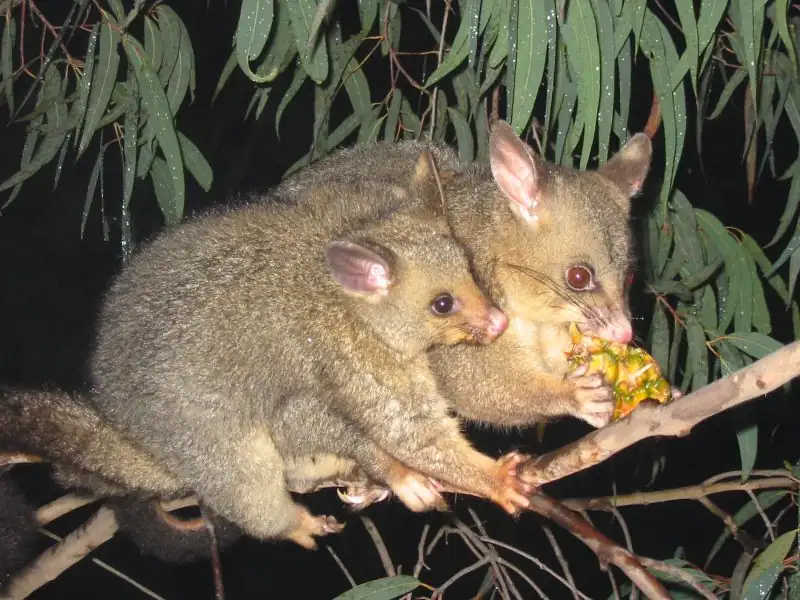
Northern Beaches Possum Services Homeowners Use Most
Northern Beaches possum problems rarely stop at trapping alone. Older roofs, damaged fascia boards, dead-animal odours, and repeat entry often mean homeowners need a full service pathway, not a one-off visit.
Why Possums Are a Serious Risk to Northern Beaches Properties
The Northern Beaches' combination of extreme tree canopy density, ageing housing stock, and coastal humidity creates possum damage risks that escalate faster than most other Sydney regions.
Electrical Fire Hazard
Possums chew electrical wiring in roof cavities. In Northern Beaches fibro homes from the 1950s-70s, original wiring is common and highly vulnerable. This is a leading fire risk, especially in Dee Why, Collaroy and Brookvale.
Insulation Destruction Without Sarking
Without roof sarking, possum urine and droppings fall directly onto insulation batts. Northern Beaches fibro homes frequently require full insulation replacement after even short possum occupation periods.
Weatherboard & Fascia Rot
Decades of coastal salt spray have already weakened timber weatherboards and fascia boards across the peninsula. Possum urine accelerates this decay to the point where boards crumble on contact.
Mould & Respiratory Contamination
Coastal humidity combined with possum urine creates ideal mould conditions in roof cavities. Northern Beaches properties with sealed or low-pitch roofs are particularly vulnerable to airborne mould spores entering living spaces.
Bushland-Interface Property Impact
Homes in Mona Vale, Avalon, Palm Beach and Newport backing onto national park or Pittwater foreshore have constant possum pressure. Evidence of infestation in these properties can significantly affect insurance premiums and sale prices.
Severe Sleep Disruption
Brushtail possums are active from 9pm to 4am. In Northern Beaches fibro homes and weatherboard properties, roof cavity noise transfers directly into bedrooms with almost no attenuation. Manly and Dee Why homeowners are among our most frequent urgent callers.
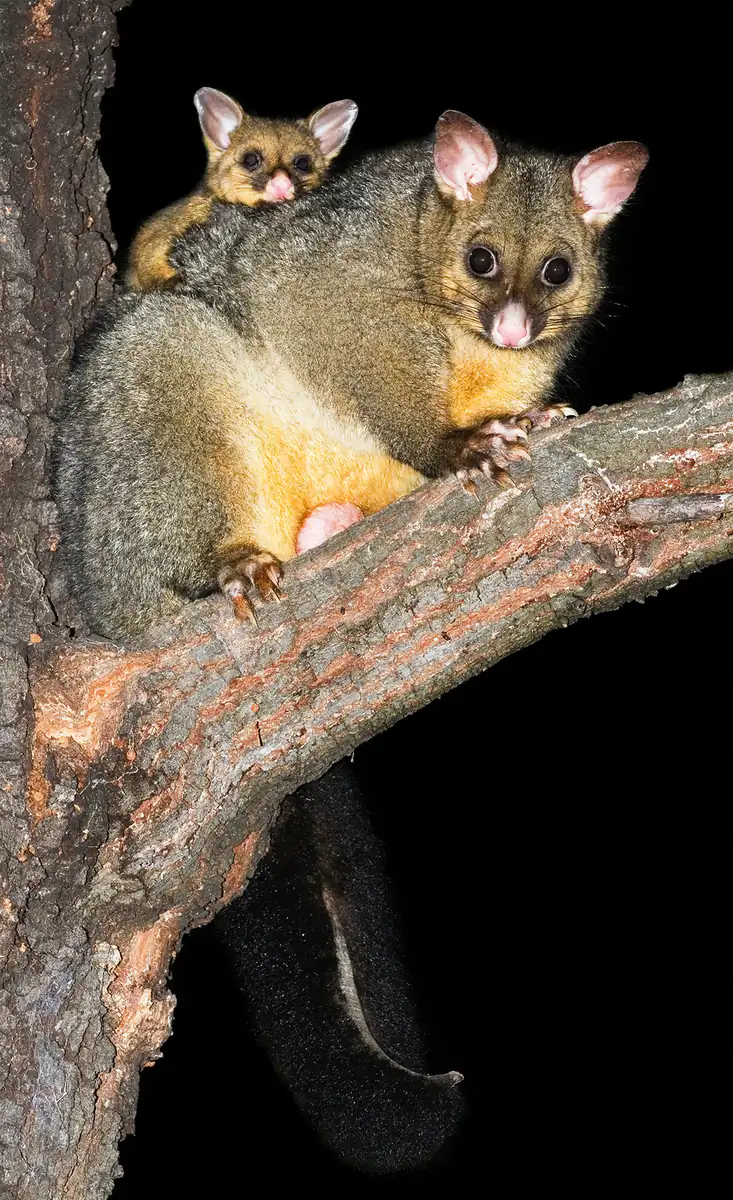
Common Brushtail in Urban Northern Beaches
The primary species entering roofs
Why Possums Choose Northern Beaches Roofs
The Northern Beaches has the highest tree canopy density of any urban area in Australia. Pittwater Council's 68% canopy coverage figure is extraordinary by any standard — compare it to the City of Sydney's 15.5% or Parramatta's 18%. That canopy is not decorative: it is a functional possum transport network. Sydney blue gums, angophoras, and turpentines growing in Ku-ring-gai Chase National Park extend their branches over suburban fences, across roads, and onto residential rooflines for kilometres. A possum living in the national park can travel to your Deewhy ceiling cavity in under an hour without ever descending to ground level.
The housing stock across the Northern Beaches was built primarily during two waves: the 1950s-70s fibro weatherboard era (Dee Why, Collaroy, Brookvale, Curl Curl, Narrabeen) and the 1980s-2000s brick-veneer era (Mona Vale, Newport, Avalon). The older fibro homes are the most vulnerable because they were constructed before roof sarking became standard in the 1990s. Sarking — a flexible membrane installed directly under roof tiles — acts as a secondary barrier that stops possums from entering through gaps in the tile line. Without it, any lifted or cracked tile becomes a direct entry point into the roof cavity. The difference between a home with sarking and one without is often the difference between a simple single-entry sealing job and a full-roof exclusion project.
Northern Beaches Council tree preservation orders add another layer of complexity. Many of the mature trees overhanging Northern Beaches rooflines are protected species that homeowners cannot legally prune. The council's Tree Management Policy requires permits for pruning of any tree with a trunk diameter over 300mm, and significant penalties apply for unauthorised removal or heavy pruning. This means that a tree branch providing direct possum access to your roofline at gutter height is legally untouchable in many cases. Our Northern Beaches team factors council tree preservation requirements into every job, designing proofing solutions that work around protected canopy rather than relying on tree pruning.
Our Humane Possum Removal Process in Northern Beaches
Every job follows the same meticulous 6-step process — compliant with NSW wildlife law, every time.
Free Same-Day Northern Beaches Inspection
We visit your Northern Beaches property, inspect the roof cavity and all entry points, identify possum species and numbers, and provide a written quote — often same day. We know exactly what to look for on fibro weatherboard, brick-veneer, and sandstone terrace roofs.
NPWS-Approved Trap Placement
We set cage traps in optimal locations in the roof cavity or on the roof surface, baited with approved attractants. Placement accounts for Northern Beaches roof geometry, tile type, sarking presence or absence, and bushland proximity.
Daily Trap Monitoring & Documentation
We check all traps every 24 hours as required by our NPWS licence. A captured possum is never left in a trap for more than one day. All checks are documented for compliance.
Humane Dusk Release
Captured possums are released at dusk, within 150 metres of your property, next to a climbable tree — exactly as required by NSW wildlife law. Ku-ring-gai Chase National Park edges, Pittwater foreshore reserves and local bushland corridors provide ideal release locations across the Northern Beaches.
Full-Roof Exclusion & Sealing
All confirmed entry points are durably sealed using stainless steel mesh, timber, or weatherboard-matched materials. For homes without sarking, we install additional barrier protection at the tile line. We guarantee no re-entry through sealed points for 6 months.
Possum Box Installation & Bushland Follow-Up
We install an NPWS-approved nesting box in a suitable tree nearby — essential for Northern Beaches bushland-interface properties where the possum reservoir effect means re-infestation pressure is constant without an alternative den site.
Two Brushtail Possums Removed — Dee Why Fibro Home
Howard Avenue, Dee Why NSW 2099
Two brushtail possums living in the roof cavity of a 1960s fibro weatherboard home for 8+ months. Extensive urine damage to insulation and plaster ceiling. Seven entry points identified — six through gaps in the tile line where no sarking existed, and one through a rotted timber fascia board on the southern elevation. Coastal salt spray had accelerated fascia deterioration to the point where the timber had the consistency of wet cardboard.
Same-day inspection and dual trap placement. Both possums captured on night three and released at dusk in adjacent bushland corridor. Sarking membrane installed across the entire eastern roof slope to provide a durable secondary barrier. All seven entry points sealed with stainless steel mesh and weatherboard-matched timber repairs. Full insulation replacement performed. Nesting box installed in back garden paperbark tree.
Zero re-entry in 12 months. Ceiling and weatherboard repairs completed. Client reports significant improvement in roof cavity dryness and no possum activity since day one. Follow-up inspection at 6 and 12 months confirmed all seals intact. The sarking installation has also reduced the home's heating and cooling costs.
"We had possums in the roof for almost a year and tried everything. The problem was the house just had too many gaps — no sarking under the tiles, rotten fascias. They didn't just remove the possums, they fixed the house so possums can't get back in. The sarking was a game-changer. Six months later, not a single sound."
— Susan M., Dee Why NSW
Possum Removal Across All Northern Beaches Suburbs
We cover all of Northern Beaches — from Manly and Dee Why to Mona Vale and Palm Beach — every Northern Beaches suburb, same-day.
Central Peninsula — Collaroy to Narrabeen
Northern Peninsula — Mona Vale to Palm Beach
Don't see your suburb? We likely cover it. Call us to confirm.
📞 Call 1800 482 916Our Possum Services in Northern Beaches
We provide a complete range of possum and wildlife management services across Northern Beaches. Each service is performed by our licensed local team.
Possum Removal
Licensed cage trapping and humane dusk release — the right way to remove possums from Northern Beaches roofs.
Possum Removal in Northern Beaches →Possum Proofing
Permanent roof exclusion using professional-grade steel mesh and materials — sealing every Northern Beaches roof entry point.
Possum Proofing in Northern Beaches →Roof Repairs
Full repair of possum-related roof damage — tiles, insulation, timber, and wiring — across all Northern Beaches property types.
Roof Repairs in Northern Beaches →Dead Possum Removal
Same-day emergency removal of deceased possums from Northern Beaches roofs and walls — with full decontamination and odour treatment.
Dead Possum Removal in Northern Beaches →Possum Boxes
Government-approved nesting box installation in Northern Beaches — the most effective way to prevent possums returning to your roof.
Possum Boxes in Northern Beaches →Strata Services
Building-wide possum management for Northern Beaches strata schemes, apartments, and commercial properties — with full OC documentation.
Strata Services in Northern Beaches →We Also Service Other Major Australian Cities
Not in Northern Beaches? Our licensed possum removal teams operate in cities across Australia. Book your local team today.
Possum Removal Northern Beaches — Frequently Asked Questions
Common questions from Northern Beaches homeowners about possum removal.
Possum removal on Sydney's Northern Beaches typically starts from $220-$280 for a straightforward single-possum job with standard roof access. Fibro weatherboard homes without roof sarking may require additional proofing due to multiple entry points along the tile line. Properties backing onto bushland or national park may need possum box installation to prevent re-infestation. We always provide a written quote before work begins.
Homeowners can See our transparent pricing before booking an inspection. We never add surprise costs once the inspection is complete, regardless of the Northern Beaches suburb.
Yes — possums are protected wildlife under the NSW Biodiversity Conservation Act 2016 across all of Sydney, including the Northern Beaches. It is illegal to trap, kill, harm, or relocate a possum without an NPWS licence. Penalties include fines up to $11,000.
All our Northern Beaches technicians are fully NPWS-licensed. Licensed possum removal Northern Beaches is designed to meet every NSW legal requirement — approved cage traps, 24-hour checks, and humane dusk release within 150 metres.
Yes — we service every Northern Beaches suburb from Manly and Dee Why through Brookvale, Curl Curl, Collaroy, Narrabeen, Freshwater and Balgowlah up to Mona Vale, Newport, Avalon and Palm Beach. See our full Northern Beaches suburb list above or call us. Same-day service is available across all Northern Beaches suburbs.
We offer same-day inspections across all Northern Beaches suburbs, including Manly, Dee Why, Mona Vale and Avalon. Most single-possum jobs are resolved within 3-5 days including trapping, removal, proofing and follow-up. For urgent situations like scratching in your roof tonight or a dead possum smell, our Northern Beaches emergency team responds same-day.
Our possum removal Northern Beaches process starts with a free inspection, same-day wherever possible. Call 1800 482 916 for same-day Northern Beaches service.
Two things make the Northern Beaches unique. First, the tree canopy density — Pittwater Council's 68% canopy coverage is the highest in Greater Sydney, creating unbroken possum highways from Ku-ring-gai Chase National Park through every suburban roofline. Second, the prevalence of 1950s-70s fibro weatherboard homes without roof sarking — these homes lack the secondary barrier under roof tiles that modern homes have, meaning any lifted or cracked tile creates a direct possum entry point. Combined with council tree preservation orders that prevent pruning of protected canopy, Northern Beaches properties face a higher and more constant possum pressure than almost any other Sydney region.
Our Northern Beaches-specific approach accounts for sarking absence, bushland-interface pressure and council tree protections. Book your free Northern Beaches inspection today.
Need Possum Removal in Northern Beaches Today?
Don't spend another sleepless night listening to scratching in your roof. Our Northern Beaches team is ready — same-day bookings available 7 days a week.
NPWS Licensed · Fully Insured · Written Quote · 6-Month Guarantee