Possum Removal Western Sydney in Sydney
Humane, Licensed & Fast
Western Sydney is a high-volume possum removal region defined by newer housing estates backing onto bushland corridors, large detached homes with expansive roof spaces, and backyard vegetation that creates elevated possum highways directly to rooflines. Parramatta and Blacktown each generate 70 searches per month for possum removal — confirmed in our search data — while newer suburbs like Kellyville, Rouse Hill and the Hills District face constant possum pressure from adjacent bushland reserves. Whether you need possum removal Blacktown for a 1970s brick home or possum removal Parramatta for a heritage cottage, our team covers all of Western Sydney. We've completed over 75 possum removal jobs across Western Sydney, every one NPWS-licensed, humane, and guaranteed. Same-day possum removal Western Sydney — including Parramatta, Blacktown, Penrith and Kellyville.
Possum Problem in Western Sydney?
Possum Removal Western Sydney — Bushland Corridors, Large Homes, and the Hills District Possum Pressure
Western Sydney presents a fundamentally different possum removal challenge from the inner suburbs. Where the Eastern Suburbs struggle with coastal humidity and the Inner West contends with brick veneer cavity entries, Western Sydney's defining problem is the bushland interface. Newer housing estates in Kellyville, Rouse Hill, Castle Hill and Baulkham Hills were built on land that was, until the 1990s and 2000s, open bushland, farmland, or Cumberland Plain woodland. That land retains its original wildlife corridors — creeks, reserve strips, and undeveloped gullies — that funnel possums directly from remaining bushland into suburban rooflines. A possum removal Kellyville job is not dealing with an urbanised possum accustomed to roof spaces; it is dealing with a territorial bushland brushtail that treats your ceiling cavity as a convenient den site on the edge of its natural territory, and that has a dozen replacement animals waiting in the adjacent reserve.
The housing stock across Western Sydney compounds the access problem. Modern detached homes in Kellyville, Rouse Hill and Castle Hill typically have larger roof spaces than inner-city properties — bigger floor plates, higher ceilings, and more complex rooflines with multiple valleys, dormers, and gable ends. Larger roof space means more entry points to inspect and more surface area to seal. Backyard vegetation is another major factor. Western Sydney properties, particularly in the Hills District, have established gardens with mature trees — eucalypts, paperbarks, and ornamental figs — that provide elevated possum access at gutter height. The gap between a tree branch and a roofline in a Kellyville or Baulkham Hills backyard is often less than a metre, and possums can jump that distance without hesitation. Possum removal Rouse Hill jobs regularly require coordination between roof sealing and tree branch management — and because many of these properties back onto council-managed bushland corridors, tree removal or heavy pruning may require council approval.
Parramatta and Blacktown are the two highest-volume individual suburbs in our Western Sydney books, each confirmed at 70 searches per month in our keyword data. Parramatta's housing mix is uniquely challenging — the Parramatta LGA includes everything from Victorian-era cottages in Harris Park, to 1970s brick homes in North Parramatta, to modern apartments along the Parramatta River precinct. The tree canopy across Parramatta Park, the river foreshore, and the surrounding street network provides elevated access routes that span kilometres. Possum removal Parramatta jobs are diverse and require a technician who can switch between heritage roof repairs in older homes and modern sarking-based exclusion in newer builds within the same day. Blacktown presents a different profile — 1970s and 1980s brick homes on larger blocks, with mature backyard gardens and proximity to the Western Sydney Parklands and reserve networks that funnel possums from the Cumberland Plain into suburban streets.
Penrith and the Blue Mountains foothill suburbs add a third dimension. Properties in Penrith, Glenmore Park, and the lower Blue Mountains precincts sit at the interface of urban development and the foothill woodlands of the Great Dividing Range. Possum populations here are denser, more diverse (including mountain brushtail populations at higher elevations), and less habituated to human presence. A possum removal Penrith job often involves animals that are more defensive, more likely to damage roof materials during exclusion, and more persistent in attempts to re-enter through newly sealed entry points. Our Penrith and Western Sydney team uses reinforced proofing materials and extended monitoring periods — typically 10-14 days instead of the standard 3-5 — for all bushland-interface jobs.
We are fully licensed under the NSW Biodiversity Conservation Act 2016, and every Western Sydney job is completed in compliance with National Parks and Wildlife Service requirements. Our Western Sydney-based technicians know the specific bushland corridors, creek-line possum highways, and council-managed reserve interfaces that drive the high-volume possum pressure across Parramatta, Blacktown, Penrith, Kellyville and the Hills District.
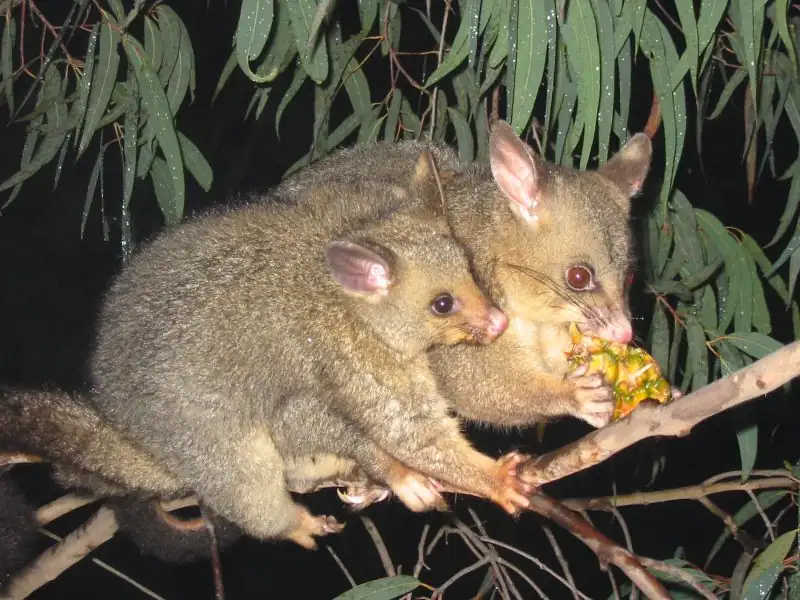
Western Sydney Possum Services Homeowners Use Most
Western Sydney possum problems rarely stop at trapping alone. Older roofs, damaged fascia boards, dead-animal odours, and repeat entry often mean homeowners need a full service pathway, not a one-off visit.
Why Possums Are a Serious Risk to Western Sydney Properties
Western Sydney's bushland interface and large home construction create possum damage risks that affect family homes and require comprehensive exclusion strategies.
Electrical Fire Hazard
Possums chew electrical wiring in roof cavities. In Western Sydney's newer homes with extensive solar panel wiring and air conditioning units in roof spaces, the fire risk is elevated. Kellyville and Rouse Hill properties are frequently affected.
Insulation Destruction at Scale
Larger roof spaces mean more insulation to destroy. Western Sydney homes typically have 50-100sqm of ceiling insulation. Possum urine contamination at this scale requires complete removal and replacement — a $2,000-$5,000 cost.
Multi-Point Roof Entry Damage
Multiple entry points across larger rooflines mean structural damage accumulates faster. Possums entering through tile gaps, gable ends, and eaves simultaneously can cause roof bracing and timber damage across multiple zones.
Mould & Respiratory Contamination
Western Sydney's summer humidity combined with possum urine creates mould conditions in sealed roof cavities. Family homes with young children are particularly vulnerable to respiratory impacts from mould spores entering living spaces.
Bushland-Interface Re-Infestation Pressure
Properties backing onto bushland corridors in Kellyville, Rouse Hill and Penrith face constant possum repopulation. A single exclusion job without ongoing monitoring is often insufficient in these environments.
Family Sleep Disruption
Brushtail possums are active from 9pm to 4am. In Western Sydney family homes with children's bedrooms in the roof level or upper storey, noise from possum activity causes severe and recurring sleep disruption.
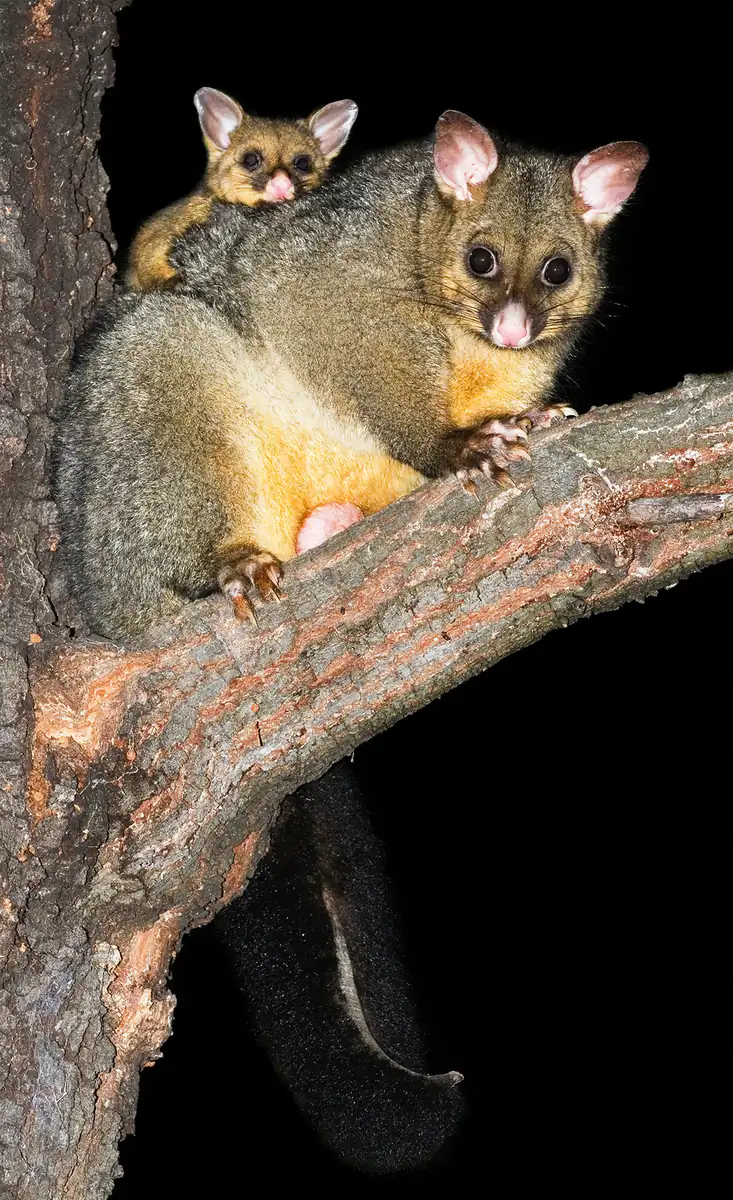
Common Brushtail in Urban Western Sydney
The primary species entering roofs
Why Possums Choose Western Sydney Roofs
Western Sydney's unique geography drives its possum problem. The region sits on the Cumberland Plain, a former woodland and grassland ecosystem that has been progressively urbanised over the last 50 years. What remains of the original ecosystem exists in fragments — creek corridors, council reserves, the Western Sydney Parklands, and the foothills of the Blue Mountains. These fragments are connected by corridors that possums have used for millennia. When a housing estate is built at the edge of one of these corridors — as Kellyville, Rouse Hill, Castle Hill and Baulkham Hills all have been — the existing possum population does not disappear. It adapts. The roof cavities of the new homes become artificial tree hollows, and the backyard gardens become foraging grounds. The result is possum pressure that is higher per property in these estate-edge suburbs than in any other part of Sydney, because the source population in the adjacent bushland is effectively unlimited.
The size and design of Western Sydney homes amplifies the problem. A typical Kellyville or Rouse Hill home has 250-400sqm of roof area, compared to 80-150sqm for an Inner West terrace. That larger roof area means more tile lines, more valleys, more gable ends, more vent penetrations, and more potential entry points. Modern building standards in these estates do require roof sarking — a positive difference from the Northern Beaches fibro homes — but sarking alone is not a guarantee. Possums exploit any gap at the edge of the sarking where it meets the gable end or eave line, and they are strong enough to push through sarking that has been poorly installed or has degraded at the edges. Every possum removal Castle Hill job we do includes a full sarking integrity check specifically because modern sarking is only effective if it is continuous and undamaged.
Tree-to-roof access is the third factor. Western Sydney backyards in the Hills District and newer estates are deliberately landscaped with established trees — eucalypts, paperbarks, crepe myrtles, and ornamental figs — that provide shade and amenity but also provide possum access at gutter height. The distance between a mature tree canopy and a two-storey roofline in Kellyville or Baulkham Hills is often less than two metres, and a brushtail possum can cover that distance in a single leap. We routinely find entry points directly adjacent to overhanging tree branches, with scratch marks on the roof tiles at the landing zone. The solution is not always tree removal — many of these trees are protected under council development control plans or are too valuable to the property to remove. Instead, we install tree-strap exclusion barriers and reinforce the roof entry zone at the tree-adjacent roofline with additional steel mesh and sarking reinforcement.
Our Humane Possum Removal Process in Western Sydney
Every job follows the same meticulous 6-step process — compliant with NSW wildlife law, every time.
Free Same-Day Western Sydney Inspection
We visit your Western Sydney property, inspect the roof cavity and all entry points, assess bushland corridor proximity and tree-to-roof access points, identify possum species and numbers, and provide a written quote — often same day.
NPWS-Approved Trap Placement
We set cage traps in optimal locations in the roof cavity or on the roof surface, baited with approved attractants. Placement accounts for Western Sydney roof size, sarking condition, tree access points, and bushland proximity.
Daily Trap Monitoring & Documentation
We check all traps every 24 hours as required by our NPWS licence. A captured possum is never left in a trap for more than one day. All checks are documented for compliance.
Humane Dusk Release
Captured possums are released at dusk, within 150 metres of your property, next to a climbable tree — exactly as required by NSW wildlife law. Western Sydney Parklands, creek corridors and local reserves provide ideal release locations.
Full-Roof Exclusion & Sarking Integrity Check
All confirmed entry points are durably sealed using stainless steel mesh, timber, or roof-matched materials. We inspect and reinforce sarking edges at gable ends and eave lines. Tree-strap exclusion barriers installed where overhanging branches provide possum access. Guaranteed no re-entry through sealed points for 6 months.
Possum Box Installation & Bushland Follow-Up
We install an NPWS-approved nesting box — essential for Western Sydney bushland-interface properties where the possum reservoir effect means re-infestation pressure is constant without an alternative den site. Extended monitoring recommended for properties backing onto reserves.
Possum Removal — Kellyville Bushland-Interface Home
Withers Road, Kellyville NSW 2155
Family of brushtail possums (one adult, one juvenile) living in the roof cavity of a 2015-built home backing onto a bushland corridor. Five entry points identified — three at sarking edges where the membrane met gable ends, one at an uncapped whirlybird, and one at a gap around solar panel mounting brackets. Extensive urine damage to insulation across the entire eastern roof zone. Family reported nightly scratching, thumping and hissing from 9pm to 4am for three months. Children's bedrooms on the upper level directly below the affected roof zone.
Same-day inspection with full roof perimeter assessment including sarking integrity check. Dual cage traps set in the roof cavity. Both possums captured on night four and released at dusk in adjacent bushland corridor — 120 metres from the capture point as required by law. All five entry points sealed: sarking edges reinforced and re-sealed at both gable ends, whirlybird capped with stainless steel mesh, solar panel brackets sealed with weatherproof exclusion foam and mesh. Sarking membrane replaced across the eastern roof slope where possum damage had compromised its integrity. Full insulation replacement performed. Two nesting boxes installed in rear garden eucalypts. 14-day monitoring period to confirm no new entry attempts.
Zero re-entry in 12 months. Family reports uninterrupted sleep since night five. Children's bedroom zone completely quiet. Follow-up inspection at 6 months confirmed all seals intact. The property manager for the estate subsequently contracted us for regular inspection services across 20 neighbouring bushland-interface homes.
"We had possums in the roof for months and it was driving our kids crazy — scratching, thumping, hissing every single night. The insulation was completely destroyed. They found five entry points, fixed every single one, put in possum boxes in the bush behind us, and it's been silent ever since. Worth every cent for our kids' sleep alone."
— Priya & Sanjay K., Kellyville NSW
Possum Removal Across All Western Sydney Suburbs
We cover all of Western Sydney — from Parramatta and Blacktown to Kellyville and Penrith — every Western Sydney suburb, same-day.
Parramatta & Surrounds
Blacktown & Penrith Corridor
Hills District — Kellyville, Rouse Hill & Castle Hill
Don't see your suburb? We likely cover it. Call us to confirm.
📞 Call 1800 482 916Our Possum Services in Western Sydney
We provide a complete range of possum and wildlife management services across Western Sydney. Each service is performed by our licensed local team.
Possum Removal
Licensed cage trapping and humane dusk release — the right way to remove possums from Western Sydney roofs.
Possum Removal in Western Sydney →Possum Proofing
Permanent roof exclusion using professional-grade steel mesh and materials — sealing every Western Sydney roof entry point.
Possum Proofing in Western Sydney →Roof Repairs
Full repair of possum-related roof damage — tiles, insulation, timber, and wiring — across all Western Sydney property types.
Roof Repairs in Western Sydney →Dead Possum Removal
Same-day emergency removal of deceased possums from Western Sydney roofs and walls — with full decontamination and odour treatment.
Dead Possum Removal in Western Sydney →Possum Boxes
Government-approved nesting box installation in Western Sydney — the most effective way to prevent possums returning to your roof.
Possum Boxes in Western Sydney →Strata Services
Building-wide possum management for Western Sydney strata schemes, apartments, and commercial properties — with full OC documentation.
Strata Services in Western Sydney →We Also Service Other Major Australian Cities
Not in Western Sydney? Our licensed possum removal teams operate in cities across Australia. Book your local team today.
Possum Removal Western Sydney — Frequently Asked Questions
Common questions from Western Sydney homeowners about possum removal.
Possum removal in Western Sydney typically starts from $220-$280 for a straightforward single-possum job with standard roof access. Larger homes with multiple entry points, bushland-interface properties requiring extended monitoring, and jobs requiring solar panel bracket sealing may cost more. We always provide a written quote before work begins.
Homeowners can See our transparent pricing before booking an inspection. We never add surprise costs once the inspection is complete, regardless of the Western Sydney suburb.
Yes — possums are protected wildlife under the NSW Biodiversity Conservation Act 2016 across all of Sydney, including Western Sydney. It is illegal to trap, kill, harm, or relocate a possum without an NPWS licence. Penalties include fines up to $11,000.
All our Western Sydney technicians are fully NPWS-licensed. Licensed possum removal Western Sydney is designed to meet every NSW legal requirement — approved cage traps, 24-hour checks, and humane dusk release within 150 metres.
Yes — we service every Western Sydney suburb from Parramatta, Merrylands, Granville and Auburn through Blacktown, Penrith, Liverpool and Fairfield to Kellyville, Rouse Hill, Castle Hill and Baulkham Hills. See our full Western Sydney suburb list above or call us. Same-day service is available across all Western Sydney suburbs.
We offer same-day inspections across all Western Sydney suburbs, including Parramatta, Blacktown, Kellyville and Penrith. Most single-possum jobs are resolved within 3-5 days including trapping, removal, proofing and follow-up. Bushland-interface properties may require extended 10-14 day monitoring. For urgent situations, our Western Sydney emergency team responds same-day.
Our possum removal Western Sydney process starts with a free inspection, same-day wherever possible. Call 1800 482 916 for same-day Western Sydney service.
Modern building standards require roof sarking, which provides a secondary barrier under roof tiles — a definite improvement over older homes without sarking. But sarking is not a perfect possum barrier. Possums exploit any gap at the edge of the sarking where it meets gable ends or eave lines, and they can push through sarking that has been poorly installed or has degraded at the edges. The main driver of possum problems in newer Western Sydney estates, however, is not the construction quality — it is the location. These estates are built on bushland interface zones with established wildlife corridors. The possum population in the adjacent reserves is effectively unlimited, and every home with a tree within jumping distance of the roofline is under constant possum pressure regardless of how well it was built.
Our Western Sydney team specialises in bushland-interface exclusion strategies. Book your free Western Sydney inspection today.
Need Possum Removal in Western Sydney Today?
Don't spend another sleepless night listening to scratching in your roof. Our Western Sydney team is ready — same-day bookings available 7 days a week.
NPWS Licensed · Fully Insured · Written Quote · 6-Month Guarantee