Possum Removal Brighton
Humane, Licensed & Fast
Brighton is the highest-volume possum removal suburb in our entire dataset — 320 searches per month, and for good reason. Brighton's Victorian and Edwardian mansion housing stock, much of it built between 1850 and 1920, features original slate and terracotta roofs with dozens of potential possum entry points across complex multi-wing rooflines. Beachfront properties along the foreshore experience extreme wind uplift that physically loosens tiles and ridge caps, creating new gaps every storm season. The tree-lined boulevards of Wellington Street, Martin Street and Bay Street form continuous canopy corridors that funnel possums from Brighton Beach and the Elster Creek parklands directly onto rooflines. We've completed over 50 possum removal jobs in Brighton alone, every one DEECA-licensed, humane, and guaranteed. Same-day possum removal Brighton for Bayside's heritage homes.
Possum Problem in Brighton?
Possum Removal Brighton — Bayside's Heritage Mansions, Coastal Wind Uplift, and the City's Highest-Volume Suburb
Brighton is not just another Bayside suburb — it is the single highest-volume possum removal postcode in our national dataset, with 320 monthly searches confirmed in our keyword data. The reason is a perfect storm of heritage architecture, coastal weather exposure, and mature tree canopies that create more possum entry points per property than any other suburb we service. A typical Brighton possum removal job involves a Victorian or Edwardian mansion built between 1880 and 1920, with original slate or terracotta Marseille tile roofing, multiple roof wings connected by valley intersections, and a tree-lined street frontage where century-old plane trees and Norfolk Island pines overhang the roofline at gutter height. The entry points on these homes are not limited to one or two locations; we routinely find five to eight separate gaps across ridge capping, valley tiles, chimney flashings, eave linings, and gable end junctions on Brighton's larger heritage properties. Possum removal Brighton jobs are the most complex single-property inspections we perform anywhere in Australia.
Coastal wind uplift is the factor that makes Brighton fundamentally different from inland Melbourne suburbs. Brighton's beachfront and near-beach properties — along Beach Road, Esplanade, and the Golden Mile — are exposed to the full force of Port Phillip Bay's prevailing south-westerlies. These winds create a suction effect across slate and terracotta roof surfaces that physically lifts tile edges, shifts ridge capping mortar, and separates flashing from chimney stacks over successive storm seasons. A tile that was snug in autumn can be lifted by 10-15mm by winter, creating a gap that a brushtail possum can exploit in a single night. Wind uplift also accelerates the deterioration of mortar bedding on ridge tiles — once the mortar cracks, the ridge cap lifts, and the possum has a direct entry route at the highest point of the roof. Brighton homeowners consistently report that possum activity spikes after heavy wind events, and our job data confirms that the weeks following a significant storm system generate 30-40% more callouts than calm weather periods.
The tree canopy corridor effect is the third factor driving Brighton's extraordinary possum volume. Wellington Street, Martin Street, Bay Street, and the tree-lined avenues of the Brighton Beach precinct are planted with mature plane trees, Norfolk Island pines, and Port Jackson figs that form an almost continuous elevated pathway from Brighton Beach and the Elster Creek parklands all the way through the suburb's residential core. Possums travel these corridors at night, moving from the foreshore vegetation into backyard gardens and onto rooflines without ever touching the ground. The canopy is so dense across parts of Brighton that a possum can traverse the suburb from end to end entirely via tree branches. The consequence for homeowners is that possum pressure in Brighton is not limited to properties backing onto parkland — the entire suburb sits under a canopy corridor network that delivers possums to every roofline within reach.
The luxury property dimension adds a distinct layer to Brighton possum work. Brighton is one of Melbourne's most expensive suburbs, and the ceiling cavities, insulation systems, and heritage roof structures of its multi-million-dollar homes represent a significant financial asset. A possum infestation in a Brighton mansion left unaddressed for three to six months can cause $15,000-$40,000 in damage — stained and collapsed plaster ceilings, saturated insulation requiring full replacement, chewed electrical wiring requiring rewiring certification, and heritage roof elements that need specialist restoration. The cost of repair in Brighton is consistently higher than in any other Melbourne suburb because the materials, labour, and heritage compliance requirements are more expensive. Our Brighton team provides detailed photographic documentation of every entry point, every seal we install, and every repair we recommend, because Brighton homeowners and their insurers require thorough records for high-value property claims.
We are fully licensed under Victoria's Wildlife Act 1975, and every Brighton job is completed in compliance with DEECA requirements. Our Brighton-based technicians know the specific entry patterns of Victorian, Edwardian, and interwar heritage homes that define Bayside's most prestigious suburb.
Brighton Possum Services Homeowners Use Most
Brighton possum problems rarely stop at trapping alone. Older roofs, damaged fascia boards, dead-animal odours, and repeat entry often mean homeowners need a full service pathway, not a one-off visit.
Possum Identification Guide for Brighton Homeowners
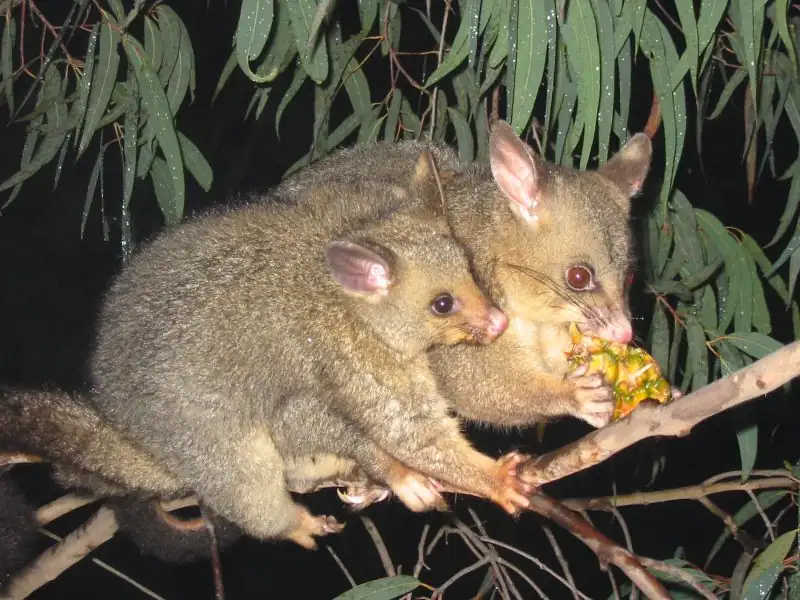
Two species commonly invade Brighton homes. Knowing which one you have helps us provide the right solution faster.
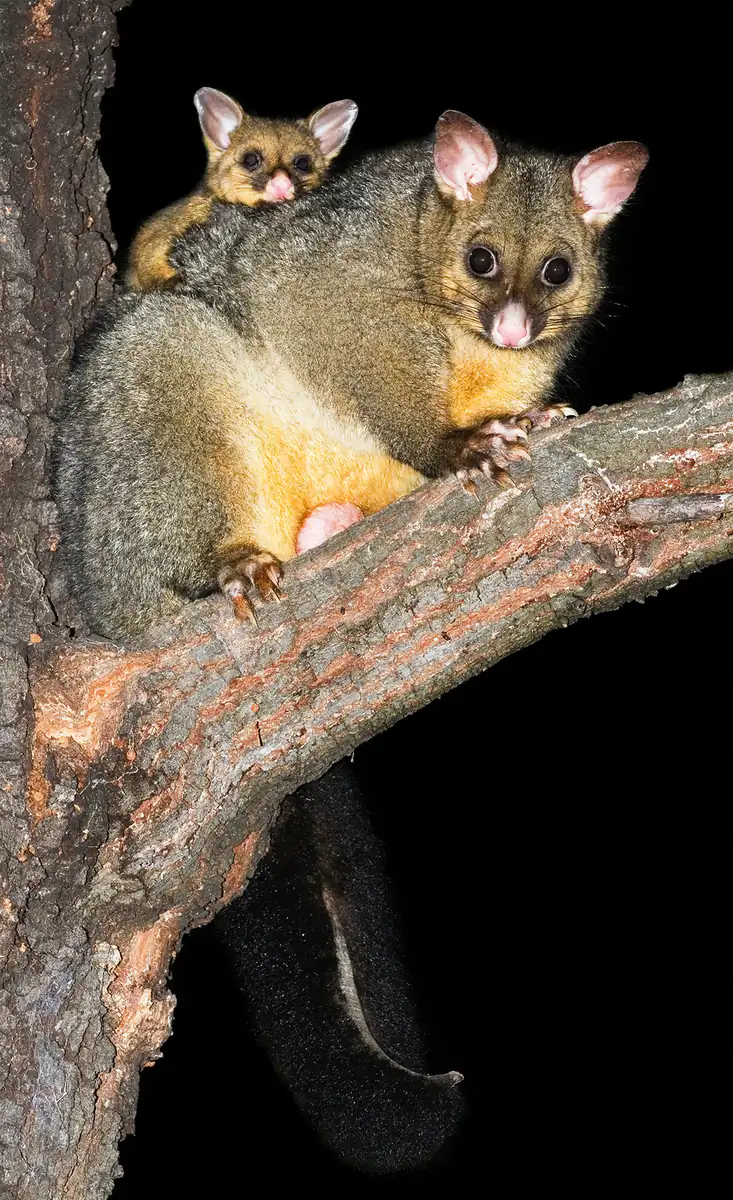
Common Brushtail Possum
Trichosurus vulpecula
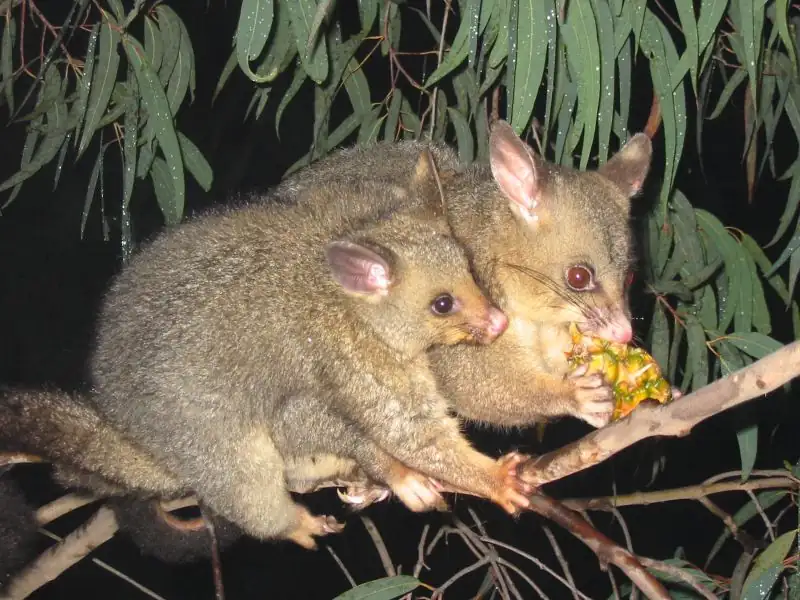
Common Ringtail Possum
Pseudocheirus peregrinus
Signs You Have a Possum in Your Brighton Home
Possums are nocturnal, so you may not see them — but you'll definitely hear and smell them. Here's what to look and listen for in Brighton homes.
Heavy thumping or running sounds
Particularly between 9pm and 4am. Brushtail possums are surprisingly heavy and loud when moving across ceiling joists.
Hissing, screeching or coughing sounds
Brushtails make guttural coughs and loud screeches, especially when disturbed or fighting for territory.
Yellow ceiling stains or ammonia smell
Possum urine soaks through insulation and into plasterboard, leaving brown-yellow stains and a strong, sharp ammonia odour.
Scratch marks on roof tiles or fascia boards
Entry and exit points are often marked with worn timber, broken tiles, or disturbed mortar — look for these at dusk.
Foul dead animal smell
A possum that has died inside your roof will create an intense odour within 48 hours. This requires urgent professional removal.
Damage to garden and fruit trees
Chewed leaves, stripped bark, half-eaten fruit — classic signs of possum foraging activity near your home each night.
🚨 Don't Ignore It
A possum in your roof is not just an annoyance. Left unaddressed, the damage escalates quickly. In Brighton's climate, moisture from possum urine can cause mould, timber rot, and short-circuits within weeks.
Call Now — 1800 482 916The Real Cost of Doing Nothing
Why Possums Are a Serious Risk to Brighton Properties
Brighton's coastal weather exposure and heritage construction create possum damage risks that escalate faster and cost more to repair than any other Melbourne suburb.
Coastal Wind Uplift Damage
Port Phillip Bay winds lift and shift slate and terracotta tiles, creating gaps that let possums in and water in behind them. The cycle of wind entry followed by water entry doubles the structural damage rate on Brighton beachfront properties.
Electrical Fire Hazard
Brighton's heritage homes often have original or partially upgraded electrical wiring. Possum chewing on cable sheathing in roof cavities creates a critical fire risk that insurers take very seriously in high-value properties.
Large Roof Footprint Structural Rot
Brighton mansions have complex multi-wing rooflines with multiple valley intersections and gable ends. A possum infestation in a heritage home with 400-600sqm of roof area can cause timber decay across multiple zones before it is detected.
Insulation Contamination at Scale
Large roof cavities mean large insulation zones. A single possum living in a Brighton mansion roof for three months can contaminate 100-200sqm of insulation, requiring full removal and replacement at significant cost.
High-Value Property Impact
Brighton's property market demands pristine condition. Evidence of possum infestation — ceiling stains, ammonia odour, roof damage — can devalue multi-million-dollar properties and trigger failed building inspections during sale.
Chronic Sleep Disruption in Mansions
Despite their size, Brighton's heritage homes often have bedrooms located directly under roof cavities due to their two-storey Victorian design. Scratching, thumping and hissing from brushtail possums transfers directly into these rooms with minimal attenuation.
Common Brushtail in Urban Brighton
The primary species entering roofs
Why Possums Choose Brighton Roofs
Brighton's heritage housing stock is the primary reason it generates more possum removal calls than any other suburb in our dataset. The suburb's Victorian and Edwardian mansions were built with slate or terracotta Marseille tile roofing that has a natural lifespan of 80-120 years — and most Brighton roofs are now 100-170 years old. Slate tiles develop hairline fractures and can slip from their fixings after a century of thermal cycling. Terracotta tiles lift at the edges as their bedding mortar deteriorates. The multi-wing rooflines that give Brighton mansions their distinctive silhouette also create multiple valley intersections, each one a potential entry point. A single Brighton heritage property typically has 5-8 discreet entry zones that must be individually identified and sealed.
The coastal microclimate compounds the structural vulnerability. Brighton sits on the eastern shore of Port Phillip Bay, directly exposed to prevailing south-westerly winds that can gust at 60-80km/h during winter storms. These winds create negative pressure zones across roof surfaces that physically lift tile edges and ridge capping mortar. The wind uplift effect is measurable: ridge capping on Brighton properties requires repointing every 5-7 years on windward roof slopes, compared to every 10-15 years in inland suburbs. Homeowners who are not maintaining their ridge capping on this accelerated schedule are effectively leaving their roofline open to possum entry every storm season.
The tree canopy corridors that line Brighton's boulevards complete the picture. The mature plane trees and Norfolk Island pines that define Brighton's prestigious streetscape were planted in the late 19th and early 20th centuries and now form a continuous canopy network that connects the foreshore, Elster Creek parklands, and private gardens across the entire suburb. Possums use these corridors nightly to move between feeding and denning sites. Any property with a tree branch within two metres of the roofline — and most Brighton properties have several — is accessible via leap entry. The canopy corridor eliminates the need for possums to cross open ground, meaning ground-level barriers like fence capping and cat deterrents are ineffective against Brighton possum entry.
Possum Removal Laws in Victoria
In Victoria, possums are protected under the Wildlife Act 1975. It is illegal to trap, kill, or relocate a possum without a current wildlife controller licence issued by DEECA (Department of Energy, Environment and Climate Action). In Victoria, trapped brushtail possums must be released on the property where they were captured, no more than 50 metres from the capture site, after sunset on the day of capture. Failure to comply risks prosecution and fines of up to $10,000. All our Brighton technicians hold current DEECA Wildlife Controller Licences.
⚠️ Penalties for illegal possum removal in Victoria include fines up to $10,000. Always use a licensed operator.
DEECA Wildlife Controller Licence
All possum trapping in Brighton requires a Wildlife Controller Licence from DEECA. Our entire Brighton team is fully licensed and regularly audited.
Home Range Release Requirement
Victorian law requires captured possums to be released within their established home range near the capture point. This is essential for the animal's survival and is a core part of our compliant Brighton process.
24-Hour Trap Check Rule
DEECA requires all cage traps to be checked within 24 hours of placement. We monitor every Brighton trap daily and document every check as required.
Full Capture Documentation
DEECA requires licensed operators to maintain records of all possum captures and releases. We provide full documentation for every Brighton job — essential for high-value property insurance records.
Our Humane Possum Removal Process in Brighton
Every job follows the same meticulous 6-step process — compliant with Victoria wildlife law, every time.
Free Same-Day Brighton Inspection
We visit your Brighton property, assess the multi-wing roofline for all entry points, check ridge capping and valley tile condition for wind uplift damage, identify possum species and numbers, and provide a written quote — often same day.
DEECA-Licensed Trap Setup
We set approved cage traps in strategic positions within your roof cavity or on the roof surface. All trap locations are documented as required by DEECA.
Daily Monitoring
We check every trap within 24 hours of placement as required under our DEECA licence. You receive a daily update each morning.
Dusk Release Near Home
Captured possums are released at dusk in a suitable tree within their home range, in line with Victorian compliance requirements. Brighton Beach foreshore and Elster Creek parklands provide ideal release locations.
Heritage Roof Entry Point Sealing
All confirmed entry points are durably sealed using stainless steel mesh, lead replacement flashings, and heritage-compatible mortar. Ridge capping is repointed using wind-resistant materials. Guaranteed for 6 months.
Possum Box Installation & Monitoring
We install a DEECA-approved nesting box in a suitable tree in or near your garden. For Brighton's large heritage properties, we recommend 12-month follow-up inspections to monitor ridge capping and valley tile condition.
Brushtail Possum Removed — Brighton Victorian Mansion
Martin Street, Brighton VIC 3186
Single adult brushtail possum living in the roof cavity of a circa-1880 Victorian Italianate mansion for 8+ months. Extensive urine staining across three separate ceiling zones in the first-floor bedrooms. Seven entry points identified across multiple roof wings: two at wind-lifted terracotta ridge capping, one at a slipped slate tile on the north-eastern elevation, two where chimney flashings had separated from the brickwork, one at a deteriorated eave lining on the rear wing, and one at a valley tile junction between the main roof and the bay window roof. Significant wind exposure on the bay-facing elevation had accelerated all entry point deterioration.
Same-day inspection with full multi-roof-wing entry point mapping. Cage trap set in the primary roof void. Possum captured on night three and released at dusk in the Elster Creek parkland corridor 130 metres from the capture point. All seven entry points sealed: ridge capping repointed with wind-resistant heritage-compatible mortar, slipped slate re-fixed with stainless steel fixings, chimney flashings replaced with lead-alternative flashing material, eave lining repaired with marine-grade plywood, and valley tile junction sealed with flexible weatherproof membrane. Full insulation replacement across the main bedroom wing. Heritage-compatible nesting box installed in rear garden Norfolk Island pine.
Zero re-entry in 16 months. Ceiling repairs completed with heritage trades for cornice matching. Client reports no possum activity or noise since day three. Follow-up inspection at 12 months confirmed all seals intact with no wind uplift damage to repointed ridge capping. Property manager for adjacent heritage terrace engaged for ongoing inspection program.
"We had no idea how many entry points there were — they found seven! The wind had been lifting our ridge caps for years and we didn't realise it was creating possum doors. They fixed every single one, matched the heritage materials perfectly, and it's been completely silent since. The documentation they provided was thorough enough for our insurance file."
— Victoria & Michael W., Brighton VIC
Possum Removal Across All Brighton Suburbs
We cover all of Brighton — from the Golden Mile to Brighton Beach and Elsternwick — every Brighton address, same-day.
Brighton Beach & Foreshore
Don't see your suburb? We likely cover it. Call us to confirm.
📞 Call 1800 482 916Our Possum Services in Brighton
We provide a complete range of possum and wildlife management services across Brighton. Each service is performed by our licensed local team.
Possum Removal
Licensed cage trapping and humane dusk release — the right way to remove possums from Brighton roofs.
Possum Removal in Brighton →Possum Proofing
Permanent roof exclusion using professional-grade steel mesh and materials — sealing every Brighton roof entry point.
Possum Proofing in Brighton →Roof Repairs
Full repair of possum-related roof damage — tiles, insulation, timber, and wiring — across all Brighton property types.
Roof Repairs in Brighton →Dead Possum Removal
Same-day emergency removal of deceased possums from Brighton roofs and walls — with full decontamination and odour treatment.
Dead Possum Removal in Brighton →Possum Boxes
Government-approved nesting box installation in Brighton — the most effective way to prevent possums returning to your roof.
Possum Boxes in Brighton →Strata Services
Building-wide possum management for Brighton strata schemes, apartments, and commercial properties — with full OC documentation.
Strata Services in Brighton →We Also Service Other Major Australian Cities
Not in Brighton? Our licensed possum removal teams operate in cities across Australia. Book your local team today.
Possum Removal Brighton — Frequently Asked Questions
Common questions from Brighton homeowners about possum removal.
Possum removal in Brighton typically starts from $220-$350 for a straightforward single-possum job with standard roof access. Heritage mansions with complex multi-wing rooflines may require more extensive entry point sealing. We always provide a written quote before work begins.
Homeowners can See our transparent pricing before booking an inspection. We never add surprise costs once the inspection is complete.
Yes — possums are protected wildlife under Victoria's Wildlife Act 1975 across all of Victoria, including Brighton. It is illegal to trap, kill, or relocate a possum without a DEECA Wildlife Controller Licence. Penalties include fines up to $10,000.
All our Brighton technicians hold current DEECA licences. Licensed possum removal Brighton is designed to meet every Victorian requirement — approved cage traps, daily checks, and dusk release within home range.
Yes — we service all of Brighton, Brighton Beach and Brighton North. Same-day service is available across all Bayside suburbs. Call us to confirm your address — same-day inspections are always available.
Port Phillip Bay's prevailing south-westerly winds create a suction effect across slate and terracotta roofs that physically lifts tile edges and ridge capping mortar. Over successive storm seasons, wind-uplifted ridge capping creates gaps that brushtail possums exploit within a single night. Brighton beachfront properties are most affected, but wind exposure extends several blocks inland. Brighton homeowners consistently report increased possum activity after heavy wind events — our job data confirms a 30-40% spike in callouts following significant storms. Regular ridge capping maintenance every 5-7 years on windward roof slopes is essential for Brighton properties.
Our Brighton team specialises in wind-resistant heritage roof sealing. Book your free Brighton inspection today.
Need Possum Removal in Brighton Today?
Don't spend another sleepless night listening to scratching in your roof. Our Brighton team is ready — same-day bookings available 7 days a week.
DEECA Licensed · Fully Insured · Written Quote · 6-Month Guarantee