Possum Removal Middle Park
Humane, Licensed & Fast
Middle Park is one of Melbourne's most tightly heritage-controlled suburbs — and that creates a unique possum removal challenge. Heritage overlay under the Victoria Planning Provisions means homeowners cannot modify their rooflines, eaves, or roof materials without council approval, making professional possum proofing using reversible methods the only legal and practical option. The Victorian terraces that define Middle Park have narrow rooflines, shared cavity walls, and parapet-and-chimney entry points that allow possums to spread from one terrace to the next in a chain reaction. We've completed over 40 possum removal jobs across Middle Park and the surrounding Port Phillip heritage suburbs, every one using reversible, heritage-compliant methods under DEECA licensing. Same-day possum removal Middle Park.
Possum Problem in Middle Park?
Possum Removal Middle Park — Heritage Overlay Compliance, Reversible Proofing, and the Terrace Chain Reaction Effect
Middle Park sits within one of the most tightly regulated heritage overlay areas in Australia. The Middle Park, Albert Park, and St Kilda heritage precincts are covered by Heritage Overlay controls under the Victoria Planning Provisions, administered by the City of Port Phillip. These controls regulate any external building work that affects the appearance, fabric, or structure of a heritage-listed property — including roof modifications, eave repairs, fascia replacement, and chimney repointing. For possum removal, this creates a fundamental constraint: you cannot simply rip out rotted timber, replace original ridge capping with modern materials, or install visible exclusion devices on a heritage terrace roof without council approval. Every possum removal Middle Park job must use reversible proofing methods that seal entry points without damaging or permanently altering original fabric. Stainless steel mesh fitted behind existing timber, lead replacement flashings installed without removing original features, and ridge capping repairs using compatible lime mortar rather than modern cement — these are the techniques that keep your home compliant with Port Phillip heritage requirements while permanently solving the possum access problem.
The shared roof cavity chain reaction effect is the defining structural challenge of Middle Park possum work. Middle Park's narrow Victorian terraces — typically 5-7 metres wide — are built in continuous rows with shared cavity walls. A possum that gains entry to number 10 can travel the entire block inside the interconnected roof void, emerging into number 14's ceiling cavity without ever being visible from the street. The chain reaction effect means that a possum infestation in Middle Park is rarely confined to a single property. We regularly attend jobs where the homeowner at number 15 has been hearing scratching for three weeks, only to discover during inspection that the original entry point is at number 8 — seven houses away — and the entire row is affected. Isolating the entry source in Middle Park requires inspecting the adjoining rooflines, not just the complaining property, and sealing the true entry point before trapping. Any possum removal service that traps without first identifying and sealing the primary entry source will fail in Middle Park, because a new possum will simply follow the same pathway through the shared cavity within days.
Parapet walls and chimney clusters are the most common entry vectors on Middle Park's Victorian terraces. Middle Park's distinctive streetscape is defined by parapeted rooflines — the low wall that extends above the roof gutter line to create a flat-fronted facade. These parapets are notoriously difficult to seal because they contain multiple junctions where the parapet meets the roof, the chimney stack, and the party wall between terraces. Mortar at these junctions deteriorates over 100-150 years, creating gaps that may be only 10-20mm wide at the outside but open into the entire shared roof void behind the parapet. A brushtail possum can squeeze through a gap that size easily. Middle Park's numerous chimney stacks — each terrace typically has two to three chimneys — add to the entry count. The flashing where chimney meets roof is a classic weak point, and on heritage terraces, original lead flashings are often cracked or separated from the brickwork. Our Middle Park technicians are trained specifically in parapet wall and chimney cluster inspection and use boroscope cameras to trace entry pathways inside cavity walls before we make any penetration or seal.
Noise amplification in Middle Park's dense housing stock creates a distinctive urgency pattern. In narrow attached terraces, the roof cavity sits directly above the bedrooms with minimal buffer — often just a single layer of plasterboard ceiling. Possum scratching, thumping, and hissing transfers through this thin barrier with almost no attenuation. Because the cavity is shared, noise from a possum at number 10 can sound like it is directly above number 12's bedroom, triggering false reports and multiple callouts for a single infestation. Middle Park and the surrounding Port Phillip suburbs generate more urgent same-day callouts per property than any other Melbourne region precisely because the noise intensity in attached terraces is unbearable within 24-48 hours of a possum taking up residence. Our response time in Middle Park is consistently under three hours for this reason — the noise urgency is real, and it does not wait.
We are fully licensed under Victoria's Wildlife Act 1975, and every Middle Park job is completed in compliance with DEECA requirements and Port Phillip Heritage Overlay controls. Our Middle Park technicians use reversible heritage proofing methods and boroscope inspection techniques that preserve original fabric while providing long-term possum exclusion.
Middle Park Possum Services Homeowners Use Most
Middle Park possum problems rarely stop at trapping alone. Older roofs, damaged fascia boards, dead-animal odours, and repeat entry often mean homeowners need a full service pathway, not a one-off visit.
Possum Identification Guide for Middle Park Homeowners
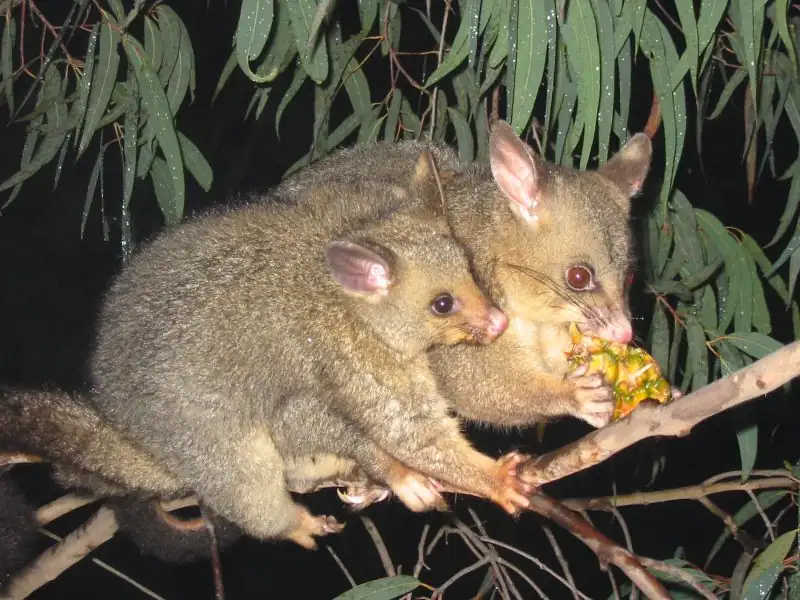
Two species commonly invade Middle Park homes. Knowing which one you have helps us provide the right solution faster.
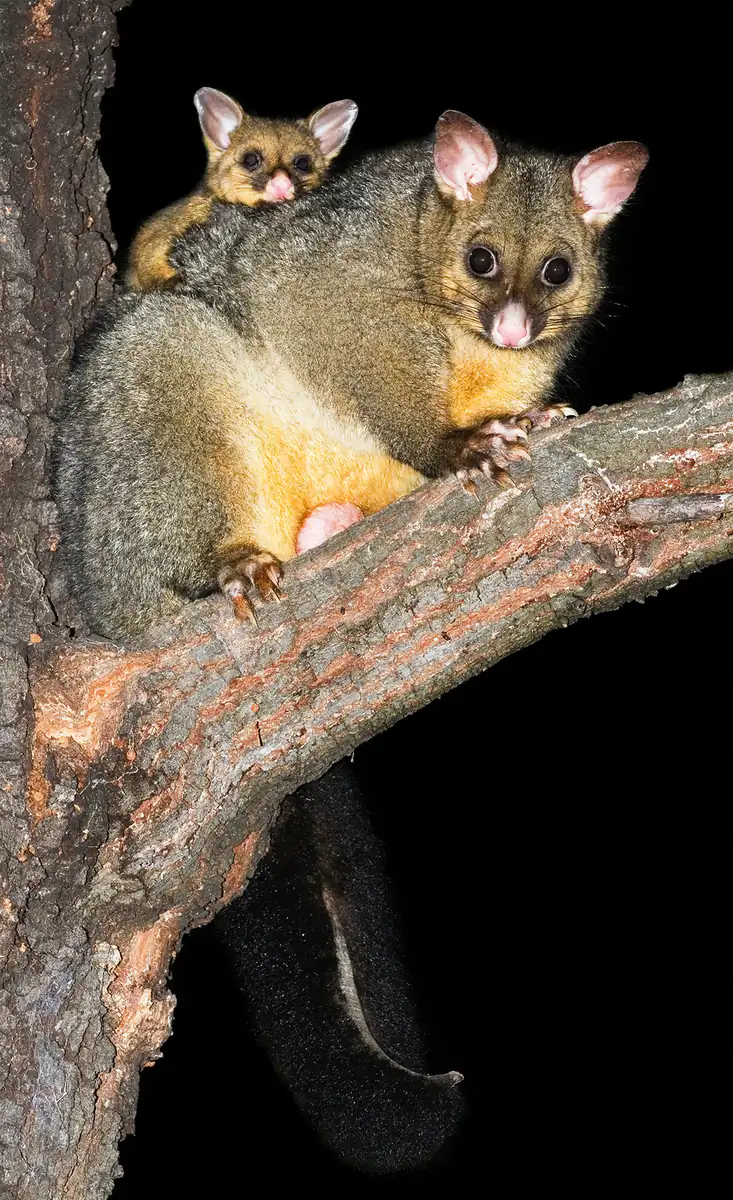
Common Brushtail Possum
Trichosurus vulpecula
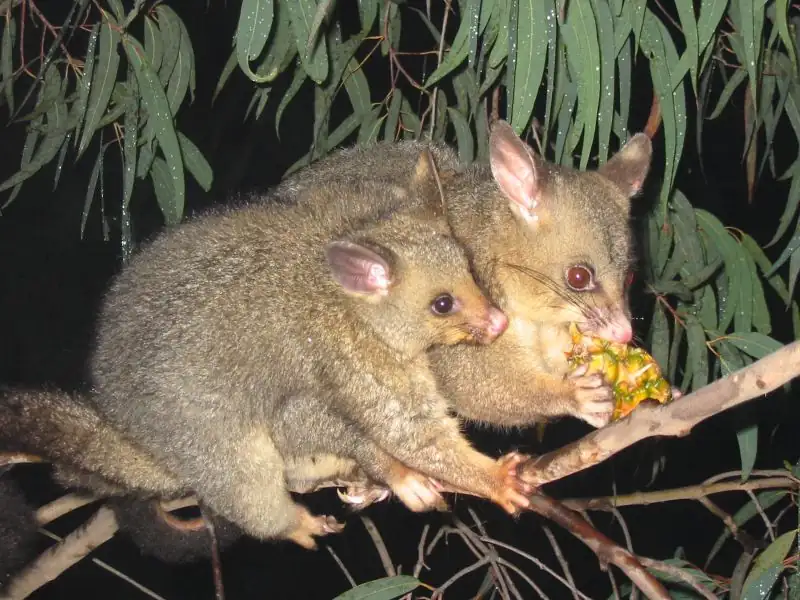
Common Ringtail Possum
Pseudocheirus peregrinus
Signs You Have a Possum in Your Middle Park Home
Possums are nocturnal, so you may not see them — but you'll definitely hear and smell them. Here's what to look and listen for in Middle Park homes.
Heavy thumping or running sounds
Particularly between 9pm and 4am. Brushtail possums are surprisingly heavy and loud when moving across ceiling joists.
Hissing, screeching or coughing sounds
Brushtails make guttural coughs and loud screeches, especially when disturbed or fighting for territory.
Yellow ceiling stains or ammonia smell
Possum urine soaks through insulation and into plasterboard, leaving brown-yellow stains and a strong, sharp ammonia odour.
Scratch marks on roof tiles or fascia boards
Entry and exit points are often marked with worn timber, broken tiles, or disturbed mortar — look for these at dusk.
Foul dead animal smell
A possum that has died inside your roof will create an intense odour within 48 hours. This requires urgent professional removal.
Damage to garden and fruit trees
Chewed leaves, stripped bark, half-eaten fruit — classic signs of possum foraging activity near your home each night.
🚨 Don't Ignore It
A possum in your roof is not just an annoyance. Left unaddressed, the damage escalates quickly. In Middle Park's climate, moisture from possum urine can cause mould, timber rot, and short-circuits within weeks.
Call Now — 1800 482 916The Real Cost of Doing Nothing
Why Possums Are a Serious Risk to Middle Park Properties
Middle Park's heritage overlay constraints and attached terrace construction create possum damage risks that affect multiple properties simultaneously and require specialist reversible repair methods.
Shared Wall Electrical Fire Risk
Possums chewing wiring in shared roof cavities of attached terraces create fire risk that extends across multiple properties. Middle Park's original Victorian wiring is particularly vulnerable.
Heritage Overlay Compliance Risk
Unauthorised roof modifications in Middle Park's HO precinct can result in council enforcement orders and fines. All proofing and repair work must use reversible methods that preserve original fabric.
Parapet Wall Structural Degradation
Deteriorated mortar in parapet junctions allows water ingress that accelerates internal timber decay. Possum entry through parapet gaps compounds this damage by introducing urine and nesting material into the cavity.
Noise Amplification Across Attached Terraces
Thin plasterboard ceilings in narrow Victorian terraces provide almost no sound attenuation. Possum activity above one bedroom can render the entire row of terraces uninhabitable at night.
Shared Cavity Mould Contamination
Possum urine in a shared roof void can spread mould spores across multiple properties through the interconnected cavity. Middle Park terraces with enclosed sub-floor ventilation are particularly vulnerable.
Building Inspection Notification Cascade
A possum infestation flagged in one terrace's building inspection can trigger notification requirements for adjoining owners in strata or owners corporation arrangements common in Middle Park's attached housing.
Common Brushtail in Urban Middle Park
The primary species entering roofs
Why Possums Choose Middle Park Roofs
Middle Park's defining feature is its intact Victorian streetscape, characterised by rows of narrow attached terraces with parapeted rooflines, multiple chimney stacks, and shared cavity walls. This construction type creates a fundamentally different possum problem from detached housing. The shared roof void means that the entire block shares the same potential entry pathways and the same infestation risk. A single gap in a parapet junction on one terrace can provide access to ten or more properties. The cavity wall construction means that possums can travel horizontally for hundreds of metres inside the wall and roof space without ever descending to ground level. This interconnectivity is the single most important factor in Middle Park possum removal — and the reason that superficial trap-and-release services consistently fail in Port Phillip heritage precincts.
The Heritage Overlay constraint adds a layer of complexity that does not exist in non-heritage suburbs. Port Phillip City Council's Heritage Overlay requires that any external building work — including roof repairs, eave replacements, fascia work, and chimney repointing — must be approved through a planning permit if it affects the significance of the heritage place. In practice, this means that standard commercial proofing products like exposed steel mesh, modern ridge capping, and visible exclusion devices may not be compliant. Our Middle Park team uses only reversible heritage proofing methods: marine-grade stainless steel mesh installed behind existing timber so it is invisible from the street, heritage-compatible lime mortar for ridge capping and parapet repointing, and lead-alternative flashings that match the appearance of original leadwork. Every seal we install can be removed without damaging the original fabric, which is the core requirement of HO compliance.
The third factor is noise. Middle Park's narrow terraces have minimal roof-to-ceiling buffer — often as little as 300-500mm between the roof surface and the bedroom ceiling below. The plasterboard ceiling provides almost no sound insulation, and the timber floorboards and joists amplify rather than dampen possum movement. A brushtail possum weighing 2-3kg moving across ceiling joists at 2am sounds, to the occupant below, like a much larger animal. The noise is the primary driver of urgent callouts in Middle Park — not damage, not odour, but the immediate, visceral disturbance of having a large animal moving directly above your bed. Our Middle Park response protocol prioritises speed not because the damage is more urgent, but because the human impact of noise in attached terraces is more acute than in any other housing type we service.
Possum Removal Laws in Victoria
In Victoria, possums are protected under the Wildlife Act 1975. It is illegal to trap, kill, or relocate a possum without a current wildlife controller licence issued by DEECA. In Victoria, trapped brushtail possums must be released on the property where they were captured, no more than 50 metres from the capture site, after sunset on the day of capture. Additionally, Middle Park properties are subject to Heritage Overlay controls under the Port Phillip Planning Scheme, meaning any roof work, eave repairs, or building modifications require council consideration. Failure to comply with DEECA requirements risks prosecution and fines of up to $10,000. All our Middle Park technicians hold current DEECA Wildlife Controller Licences and use only reversible heritage-compliant proofing methods.
⚠️ Penalties for illegal possum removal in Victoria include fines up to $10,000. Always use a licensed operator.
DEECA Wildlife Controller Licence
All possum trapping in Middle Park requires a Wildlife Controller Licence from DEECA. Our entire team is fully licensed and regularly audited.
Heritage Overlay Compliance
Middle Park properties fall under Port Phillip Heritage Overlay controls. All proofing and roof work must use reversible methods — stainless steel mesh behind existing fabric, compatible lime mortar, and no visible external devices.
24-Hour Trap Check Rule
DEECA requires all cage traps to be checked within 24 hours of placement. We monitor every Middle Park trap daily and document every check as required.
Documentation for Owners Corporation
Many Middle Park terraces are part of owners corporations. We provide full capture and exclusion documentation suitable for OC records and insurance compliance.
Our Humane Possum Removal Process in Middle Park
Every job follows the same meticulous 6-step process — compliant with Victoria wildlife law, every time.
Free Same-Day Middle Park Inspection
We visit your Middle Park terrace, inspect the shared roof cavity using boroscope cameras, map parapet and chimney entry points across adjoining properties, identify the true entry source, and provide a written quote — often same day.
DEECA-Licensed Trap Setup
We set approved cage traps in strategic positions within the roof cavity. All trap locations are documented as required by DEECA.
Daily Monitoring
We check every trap within 24 hours of placement as required under our DEECA licence. You receive a daily update each morning.
Dusk Release Within Home Range
Captured possums are released at dusk in a suitable tree within their home range, in line with Victorian compliance requirements. Albert Park Reserve and St Kilda Botanical Gardens provide ideal release locations.
Reversible Heritage Entry Point Sealing
All confirmed entry points are sealed using reversible heritage methods: stainless steel mesh behind existing timber, compatible lime mortar for parapet and chimney repointing, lead-alternative flashings. No visible external devices. Guaranteed for 6 months.
Possum Box Installation & Adjoining Property Notification
We install a DEECA-approved nesting box in a suitable tree. For attached terraces, we provide adjoining property notification so neighbours can inspect for secondary entry points in their section of the shared roof void.
Brushtail Possum Removal — Middle Park Victorian Terrace Row
Richardson Street, Middle Park VIC 3206
Single brushtail possum living in the shared roof cavity of a row of four 1880s Victorian terraces. Resident at number 12 reported three weeks of scratching and thumping directly above the main bedroom. Boroscope inspection revealed the possum was entering through a 15mm gap at the parapet junction of number 8 — four houses away — where the original mortar had completely deteriorated. The animal was travelling the entire length of the shared roof void nightly. Three additional entry points identified across the four properties: two at chimney flashing separations and one at a deteriorated rear eave lining. Heritage Overlay HO precinct restrictions applied to all external work.
Same-day inspection with boroscope cavity mapping across all four properties. Single cage trap set in the roof void at number 12. Possum captured on night two and released at dusk in Albert Park Reserve within the legal home range. All four properties' entry points sealed using reversible heritage methods: parapet junctions repointed with compatible lime mortar, chimney flashings repaired with lead-alternative material matching the original profile, rear eave linings repaired with marine-grade plywood installed behind the existing timber. Stainless steel mesh installed behind the parapet coping on the entire row to prevent future entry at the junction zone. One DEECA-approved nesting box installed in the communal rear garden.
Zero re-entry in 14 months across all four properties. No noise complaints from any resident since day two. Owners corporation for the row engaged for annual inspection program. Heritage-compliant methods approved by Port Phillip heritage officer on follow-up inspection.
"The noise was driving us insane and we assumed it was just our roof. They found the entry was four houses away — we never would have figured that out. The boroscope inspection showed us exactly where the possum was travelling. They fixed every single property in the row, matched our heritage terrace perfectly, and we've all been silent ever since. The council heritage officer was impressed with their approach."
— Jonathan M., Middle Park VIC — Owners Corporation Chair
Possum Removal Across All Middle Park Suburbs
We cover all of Middle Park — from Middle Park and Albert Park through the Port Phillip heritage precincts — same-day.
Port Phillip Heritage Precincts
Don't see your suburb? We likely cover it. Call us to confirm.
📞 Call 1800 482 916Our Possum Services in Middle Park
We provide a complete range of possum and wildlife management services across Middle Park. Each service is performed by our licensed local team.
Possum Removal
Licensed cage trapping and humane dusk release — the right way to remove possums from Middle Park roofs.
Possum Removal in Middle Park →Possum Proofing
Permanent roof exclusion using professional-grade steel mesh and materials — sealing every Middle Park roof entry point.
Possum Proofing in Middle Park →Roof Repairs
Full repair of possum-related roof damage — tiles, insulation, timber, and wiring — across all Middle Park property types.
Roof Repairs in Middle Park →Dead Possum Removal
Same-day emergency removal of deceased possums from Middle Park roofs and walls — with full decontamination and odour treatment.
Dead Possum Removal in Middle Park →Possum Boxes
Government-approved nesting box installation in Middle Park — the most effective way to prevent possums returning to your roof.
Possum Boxes in Middle Park →Strata Services
Building-wide possum management for Middle Park strata schemes, apartments, and commercial properties — with full OC documentation.
Strata Services in Middle Park →We Also Service Other Major Australian Cities
Not in Middle Park? Our licensed possum removal teams operate in cities across Australia. Book your local team today.
Possum Removal Middle Park — Frequently Asked Questions
Common questions from Middle Park homeowners about possum removal.
Possum removal in Middle Park typically starts from $220-$350 for a straightforward single-possum job. Heritage terrace properties with shared roof cavities and parapet entry points may require more extensive inspection using boroscope cameras and reversible sealing methods. We always provide a written quote before work begins.
Homeowners can See our transparent pricing before booking an inspection. We never add surprise costs once the inspection is complete.
Yes — possums are protected wildlife under Victoria's Wildlife Act 1975 across all of Victoria, including Middle Park. It is illegal to trap, kill, or relocate a possum without a DEECA Wildlife Controller Licence. Additionally, Middle Park properties are subject to Heritage Overlay controls, meaning all roof work and proofing must use reversible methods. Penalties for illegal removal include fines up to $10,000.
All our Middle Park technicians hold current DEECA licences. Licensed possum removal Middle Park uses reversible heritage methods that comply with Port Phillip Heritage Overlay requirements.
Yes — we service all of Middle Park, Albert Park and the surrounding Port Phillip heritage precincts. Same-day service is available for all heritage terrace properties. Call us to confirm your address.
Middle Park's narrow Victorian terraces are built in continuous rows with shared cavity walls. A possum entering through a gap in one property's parapet or chimney flashing can travel the length of the entire row inside the interconnected roof void without ever being visible from the street. This chain reaction effect means the possum you hear scratching in your ceiling may have entered through a neighbour's roof four houses away. Effective possum removal in Middle Park requires boroscope inspection of the entire row to identify the true entry source — trapping without identifying the primary entry point will fail because a new possum will follow the same pathway through the shared cavity within days.
Our Middle Park team specialises in shared roof cavity inspection and isolation. Book your free Middle Park inspection today.
Yes — we use only reversible heritage-proofing methods that do not require planning permits under the Port Phillip Heritage Overlay. Our techniques include installing stainless steel mesh behind existing timberwork so it is invisible from the street, repointing ridge capping and parapet junctions with compatible lime mortar, and using lead-alternative flashings that match the appearance of original leadwork. Every seal can be removed without damaging the original heritage fabric. Port Phillip's heritage officers have confirmed our methods as compliant on multiple follow-up inspections.
Our heritage-compliant approach is documented for every Middle Park job. Book your free Middle Park heritage inspection today.
Need Possum Removal in Middle Park Today?
Don't spend another sleepless night listening to scratching in your roof. Our Middle Park team is ready — same-day bookings available 7 days a week.
DEECA Licensed · Fully Insured · Written Quote · 6-Month Guarantee